Showing posts with label vintage photos. Show all posts

Wednesday, August 10, 2016

1920s Bathing Suit and Swim Boot Details

I'm excited to be heading off to the 1920s in a few weeks, so I've been doing a lot of 20s sewing to get ready! The first project on my list was re-doing my 1920s bathing suit and adding swim boots.

The suit was initially a quick and dirty project the day before an event, and is made from a pair of stretchy athletic pants and a knit dress (both black). It was perfectly serviceable, and I'm glad I had it (it would have been sad to miss the swimming!), but I had really wanted it to be improved before I wore it again. I originally wore it with black ballet flats as makeshift swim shoes, as little bathing slippers were popular during the early 20th century and the rocky terrain especially called for them. 

bathing suit and slippers last summer
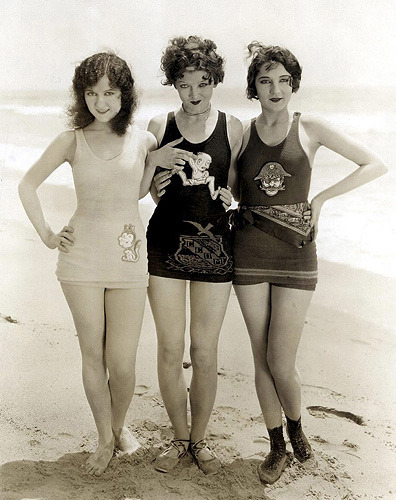
actresses on the beach, 1926--Myrna Loy, center, is wearing bathing slippers
The shoes were falling apart when I used them, and they didn't survive the excursion, so I decided after that that I really wanted to make new bathing slippers for this year. I mentioned this to my friend Quinn, and she was kind enough to pass my desire along to Gina of Beauty From Ashes, and Gina shared the pattern she drafted for bathing boots from an original pair. Thank you, Gina! This was incredibly generous and I am so grateful! 

Quinn has posted about her bathing boots already, and she was good and took lots of in-progress shots. I was not! So I recommend popping over to check out her interesting research and images. I do have some inspiration images to share though!

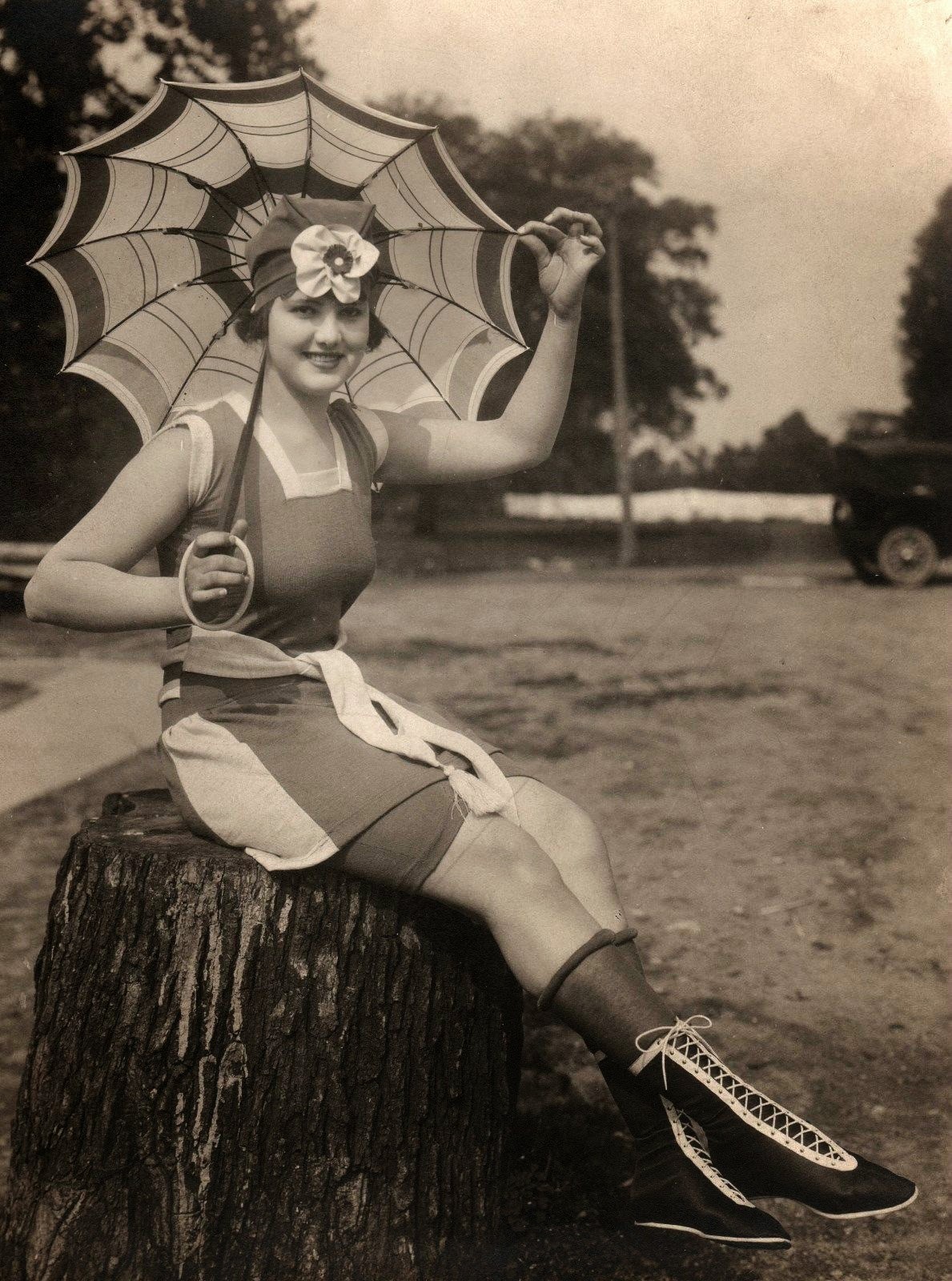
Ohio, 1920s
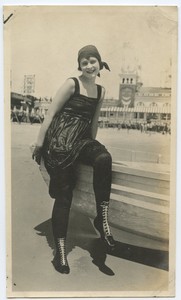
Atlantic City, NJ, c.1920
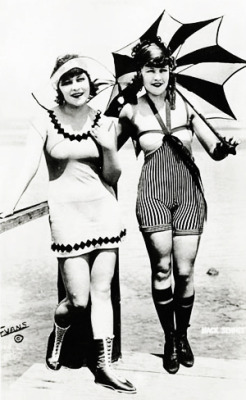
1920-1930
souvenir postcard of movie actress Phyllis Haver on the beach
I'd already fallen in love with several yellow and black bathing suits, so I knew I wanted to go for yellow trim with my existing black suit. I purchased yellow and black cotton canvas online for my swim boots, and used the extra yellow canvas to trim the neck of my bathing suit dress and add stripes to the skirt and shorts. 

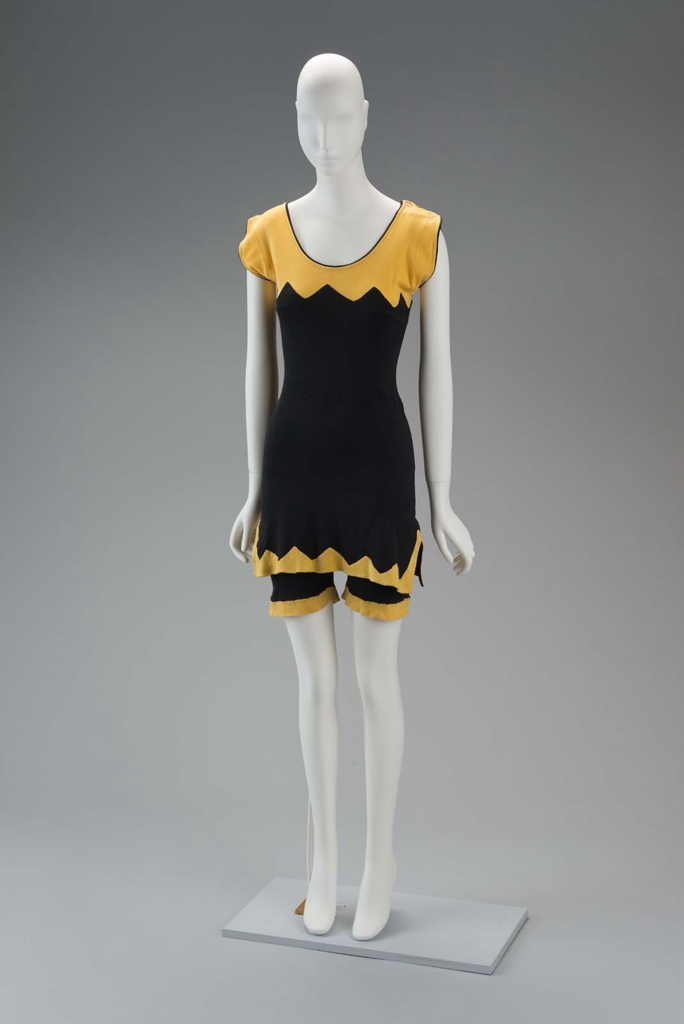
bathing suit (with matching cape!), 1920s (MFA)
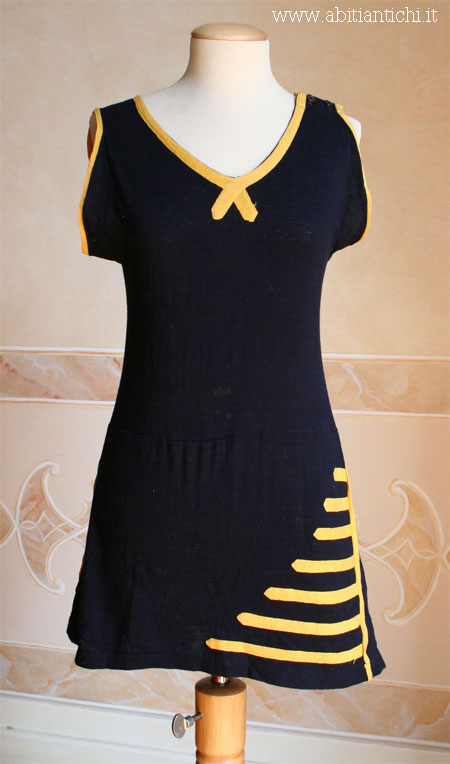
knit suit, 1920s (via)
I decided to go with diagonal stripes because I thought they looked particularly sporty, and I'm quite pleased with the finished suit!

at the beach!
 Starting with modern clothing was a sneaky cheat to make this an easy, cheap project. Plus, it's very sturdy and machine washable, which is handy when dealing with sand and saltwater.


admiring art at the Nantasket Beach DCR building, which was originally built in the 1910s
Gina's boots patter went together easily, although our use of thicker cork for the soles meant that there was a lot of hand sewing. It worked out in the end, though, as the boots are very sturdy and help up well through beach adventures. I'm excited to wear them again! 
boot selfie?
Girls in boots and barefoot in the waves
 There are only two minor problems with this bathing ensemble: the stripe on the bottom of the shorts is a different color yellow, and my boots are too big. The alternate yellow is left over from the earlier iteration of the suit, but I didn't want to replace it with canvas because I was worried the less stretchy canvas wouldn't be able to handle my thighs. I've done too many squats to be contained! ha. The boot size issue is a little more confusing, but I think it's from a combination of tracing the pattern onto each piece (and thus getting a little larger each time between cutting and tracing) and my paranoia about ending up with too-small boots. I overshot! Oh, well. They look a little silly and duck-footy on land, but they're great paddles in the water.


 Overall, I'm incredibly pleased with this, and so excited to wear it again! I love the beach in any period, so it's a treat to be able to swim and wear silly clothes at the same time.

I am a ham in every period

Wednesday, July 13, 2016

A Day at the Beach (in Black and White)

We've had some absolutely beautiful, bright, scorchingly hot weather the past few weeks, so I was thrilled to head to historic Nantasket Beach for an outing with the Tweed Club!

at Nantasket
Of course, Saturday morning dawned clear and bright...and cool! Possibly the coolest day we've had in weeks, with the promise of thunder. Not an ideal beach day. But that meant that we had the place to ourselves, which turned out to be perfect for taking pictures and running amok in true 1920s fashion. Plus, our period bathing suits (and all the aforementioned running amok) kept us nice and warm despite the weather. Perfect!

amok!
Nantasket Beach was the perfect location for a 1920s outing, as it's been a popular seaside destination for Bostonians since the 19th century. The boardwalk was full of amusements in its heyday, from the Klondike Arctic exhibition (complete with live polar bears) to towering roller coasters, carnival games, and wandering circus performers. 
Nantasket beach (and parking!), c.1920s
Beginning in 1818, Bostonians eager to escape the city could take boats from Boston to Hull--everyone from U.S. presidents to workers on their day off would--by the 1890s, over two million passengers were making the trip each summer. Resorts, restaurants, and the amusement park entertained visitors when they weren't on the beach.

postcard of Paragon Park, early 20th century
One particular amusement (a wildly popular one in Boston!) of Paragon Park was the carousel. Opening in 1928, the Paragon Carousel (known as PTC #85 for its manufacturer, Philadelphia Toboggan Company) features 66 hand-carved realistic-style horses and two Roman chariots (also pulled by horses). While the rest of the park has been dismantled, the Paragon Carousel remains as a historic legacy with its own museum and restoration workshop (which is an amazing process, still done by hand). 

the Paragon Carousel
James Hardison works on carousel restorations, courtesy of the Paragon Carousel Museum
Best of all, you can still ride it!

riding the 1928 carousel in our bathing suits
Given the gray weather and our sporting togs, I was feeling inspired by photographs of beach adventures from the period, and I wanted to capture the same feeling:

girls at Revere Beach (also MA!), 1919 (Boston Public Library)
1920s (Art Institute of Chicago)


So when editing the photos, I decided to shift into black and white. I love the way these turned out! And don't worry--I have another post on my outfit (specifically my super cool new bathing boots) coming soon...and those images will return to lovely technicolor. But for now, enjoy the brief dip into the 20s!


I am a ham.


Our fabulous tweed club hosts did a great job organizing the outing, and it was a blast to attend! Thank you!

Saturday, July 2, 2016

Feathers and Lace for the 1920s

I was lucky enough to hit a Unique Vintage sale a few years ago, and so it's been a long time since I made a 1920s evening dress. I associate the 20s with glitzy beaded and sequined ensembles, but lately a few particular dresses have been speaking to me that go against the image--they're chiffon and feathers instead. A very different kind of glamour, and I'm very excited to try it out!
Marion Morehouse in an airy Louise Boulanger dress, 1926
I found some pretty great ostrich feather trim on eBay for a decent price, and snatched up 11 yards in a pretty periwinkle blue. The feathers came today, so now I can bring them to the fabric store to find fabric in a matching color! In particular, I'm very inspired by this dress:

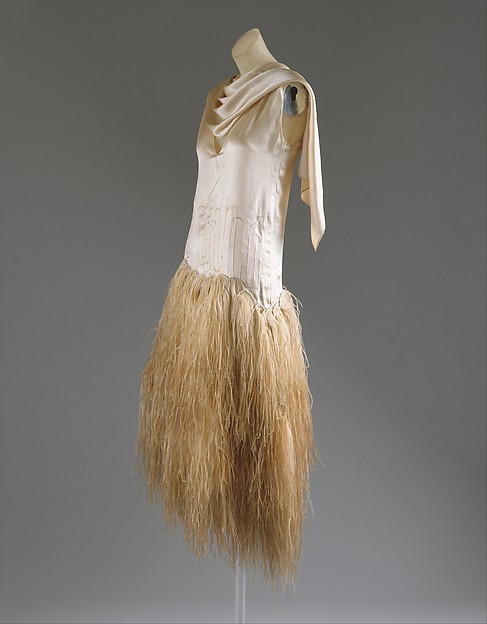
beaded chiffon dress with marabou skirt (via)
Last trip to the fabric store, I found some really lovely gold lace. My plan is to make an overdress of gold lace, an under dress of something periwinkle, and then layer feather trim over the skirt panel to create the feather effect. 

detail of the marabou feathers sewn to chiffon
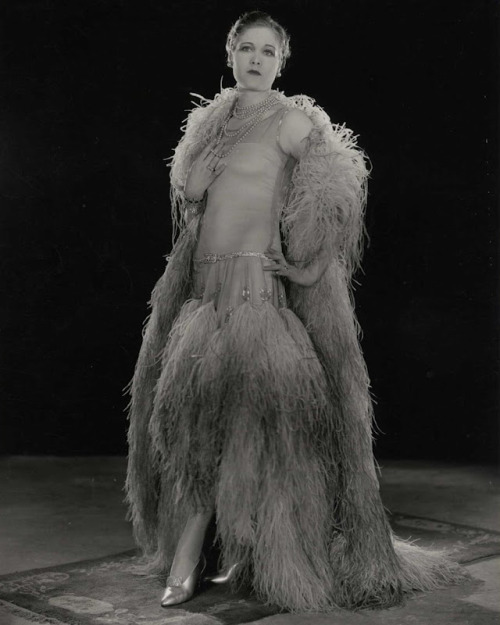
I'm pulling additional inspiration from some other glamorous numbers, which are trimmed in ostrich feathers rather than marabou I think:
Louise Boulanger, 1928 (via)
Chanel, 1920s
posed shot of girls (possibly performers?) in feather-skirted dresses
Peggy Hoyt, 1927 (via)
serious feathers, Fashions for Women, 1920s
Hooray for new materials to make an otherwise entirely unflattering decade feel downright fabulous! Now I just have to find the right fabric...

Sunday, September 13, 2015

Paul Poiret, "The King of Fashion"

It appears this last gasp of summer is all about the early 20th century--I was at a 20s event a couple of weeks ago, and now I'm gearing up for a fabulous suffrage rally and "Chelmsford Abbey" ball. After not having any time to sew all summer, planning for these events has ended up all centered around one particular designer from the 1910s and 20s: Paul Poiret. He was such an iconic designer that he was often referred to as the "king of fashion," and while I can't say I'd ever been particularly drawn to him before, all of a sudden I'm on the Poiret train!

whoops, sorry--not PoirOT! PoirET!
 
yep, that's the one....
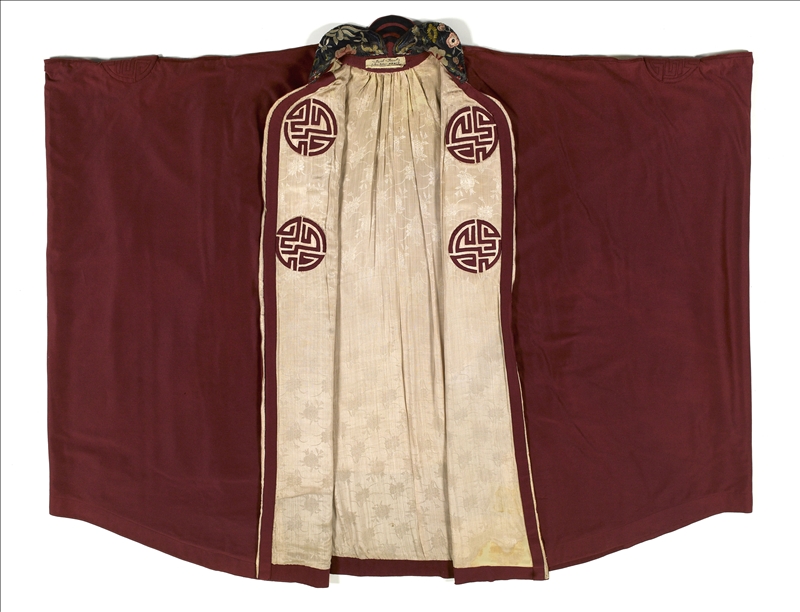
Poiret was an incredibly influential designer with a flair for the dramatic, which appeared not only in his couture designs but in his relationship with theater as runway (similar to the modern red carpet at awards shows). Poiret began his career shopping designs to fashion houses around Paris before moving to work as staff for particular design houses. One of those was Worth, where Poiret was hired in 1901 to produce the less showy pieces for Worth clients--the "fried potatoes" of a Worth wardrobe.  At this time Poiret was beginning to experiment with shapes from other areas of the world, and designed a coat based on Japanese kimonos, which are cut along straight lines and lie flat. The story goes Poiret decided to leave Worth after one such coat for Princess Bariatinsky of Russia was rejected. Upon seeing the coat, the princess declared that it looked like the sacks in which heads are placed after beheadings--not a compliment! So Poiret left to set up his own couture house, where he could experiment with styles from a variety of origins for his muse--his wife Denise, whose slender build was ideal for Poiret's draped creations.

a Poiret "confucius" coat
via the Met


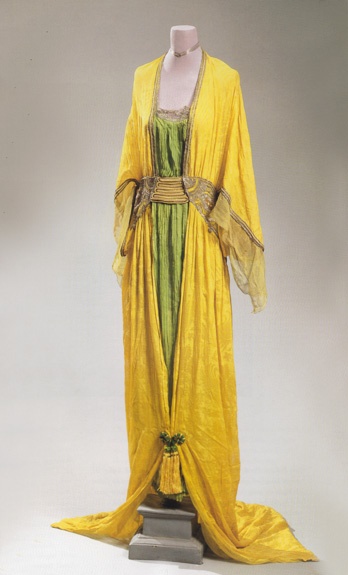
The Poiret house, started in Paris in 1903, went on to heavily influence popular fashions of the 1910s and 1920s. Poiret pioneered draping as a technique for design and construction, and heavily used rectangles as the base shapes for his designs--a huge departure from the accentuated curves and detailed fit of the 1900s. Along with other lead designers of the time (include Madeleine Vionnet, who invented bias cut dresses and protected the idea with a copyright), Poiret's flowy dresses moved away from the fitted gowns of decades past, and therefore were not tied closely to undergarments (thereby not requiring a corset). This was a monumental change, and these high fashion ensembles are a dramatic departure from previous silhouettes.

Poiret, Spring 1913 (via Vintage Textile)
Poiret was particularly interested in drawing from the aesthetics of non-western cultures, primarily French colonies and/or countries beginning to trade with France, including North Africa, Japan, and the Middle East, as well as antiquity, such as the draped chitons of ancient Greece. The influence of these regions on Poiret's designs can be seen everywhere from wide headbands and turbans to wide "kimono" sleeves and the use of brocades. 
dress and embroidered vest by Poiret (via)
brocade gown with wide sleeves by Poiret, 1922 (the Met)
While Poiret is famous for his Asian and Middle Eastern inspired designs, aesthetics from these regions became incredible popular during the 1910s in fashion and the arts. In June 1910 the Ballet Russes premiered Scheherazade, based on "1001 Nights," which was a smashing success. Inspired by a collection of Persian minitures, the costumes designed by Leon Bakst fueled the fire of Poiret's high fashion designs. 

Vera Fokina and Mikhail Fokine in Scheherazade, 1910
With the success of Scheherazade, Poiret launched his Orientalist designs in full--including the "jupe-pantalon" (skirt-trouser) for women, which was considered incredibly scandalous both for introducing pants into couture womenswear and the sexualized references Poiret made with the styles, which he called "harem" pants/skirts (both seem to be used interchangeably?). While I'm fairly uncomfortable with the term "harem pants" for its racist undertones (or not-so-undertones), the introduction of female fashions with two legs (no matter how baggy and skirt-like) is important because it aligns with several other movements towards more equality for women: the decline of the corset, the women's suffrage movement, and women's involvement in WWI. For this reason, I'm feeling particularly drawn to jupe-pantalon styles at the moment. It was exactly what the anti-suffrage movement was afraid of--women wearing pants! (and yet, the earth didn't explode...funny, that.)

c.20s, with a very "deco" pattern
Belgian postcard, 1913
evening ensemble, 1914
Also, Sybil shows up to dinner in a "jupe culotte" ensemble in season 1 of Downton Abbey. Who doesn't want to dress like Sybil?

scandal!