Showing posts with label movies. Show all posts

Thursday, December 5, 2019

Dancing in Little Women part 2: The Laurence Boy

Welcome back, all! When we left off, I was sharing some thoughts on the major elements of mid-19th century dancing--today we'll move on to actually quoting some things. Hooray!

In the novel Alcott mostly mentions round dances by name, so that is what we will focus on today; we'll talk more about the other types of dancing later on.

Image may contain: one or more people, crowd and indoor
spirals in the grand march (not a dance we're touching on today, actually, but it looks lovely and dramatic from above)

As we discussed last time, dancing in the mid-19th century included a mix of contra dances (danced in sets with many other couples), quadrilles (danced in sets of usually four couples), and round dances (danced by individual couples moving around the ballroom). Formal balls usually started with a march, which gave you a nice chance to see everyone else's outfits was a follow-the-leader set of figures that could include the entire party at once. Then there would be a mix of dances, varying the style and groupings of attendees throughout the evening. An interesting note about the round dances (our topic today) is that there are multiple dances with similar tempos, and the dances often bleed into each other as variation steps. It keeps things interesting!
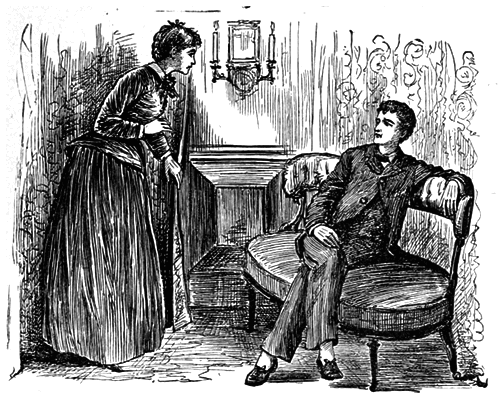
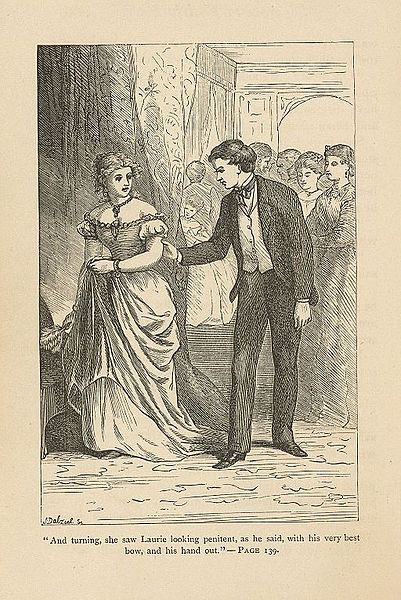
Face to face with the Laurence boy
illlustration for "The Laurence Boy" from the Gutenberg e-edition
Polka (4/4)
"The hall was empty, and they had a grand polka; for Laurie danced well, and taught her the German step, which delighted Jo, being full of swing and spring." -The Laurence Boy

Well, was there anywhere else to start? Not only is the polka the first dance mentioned by name in LW, it's also the dance Laurie and Jo do together when they first meet. It's energetic, and very fitting for Jo. As Howe puts it:
"Unlike the waltz, which is a continual whirling round, and which allows no pause or cessation until the dancers are exhausted, the Polka admits of exceeding variety" -Howe (1862)

So there you have it. As Howe mentions, one of the fun things about polka is that there are a ton of variation steps, so you can change things up as you're dancing around the ballroom. My guess is that "the German step" mentioned in the text is a variation, but we'll come back to that. Let's start with the basics. 

illustration of the polka, from Howe 1862
The basic polka is danced in closed position, and is comprised of step-togethers and hops, allowing the couple to turn around each other while also moving around the room. You can keep doing that forever, or mix in other positions so that the couple isn't turning but is continuing to take steps and hops around the ballroom. You can also mix in variation steps that add diversity to the pace and tenor of the movement. Polka requires dancers to take tiny steps, be light on their feet, and able to think fast while they move. When it's done well it looks bright and airy, and not at all as difficult as it can be (especially when executing complicated variations). As Durang (1856) puts it (emphasis mine):
"There is only one Polka known or recognized in the fashionable world; but the style of dancing it varies considerably. The most elegant people, and the best dancers, always dance it in a quiet, easy style; and those gentlemen who rush and romp about, dragging their partners along with them until they become red in the face and covered with the dewdrops of a high corporeal temperature, are both bad dancers, and men of very little good breeding."

Here's an example from an old performance. The first 25 seconds are the basic polka step, then the variations start. How many distinct variations can you spot?*


Of course, this was a choreography for performance where we all knew the order. Imagine being in a real ballroom, dancing socially: someone (in period, the gentleman) has to come up with what variations to do on the fly, and then both partners have to execute them. Not only do you need to be light on your feet, you need to think at the speed of light! As I said, a perfect dance for Jo.

And speaking of variations...what was "the German step" Laurie taught her? This is a hard one. "Bohemian" steps and styling were quite popular in the mid-19th century, and there are many bohemian-by-way-of-France dances that appear in manuals. As Coulon (1860) describes,
"whether the Polka be German or Hungarian by birth, is a question frequently discussed by writers on the subject. It has, in fact, during the last few years, been so completely remodelled [sic] in France that it may almost be said to have taken its rise there." So "the German step" could be a general reference, or it could be a specific step. In fact, there is a German Polka contra dance in Howe's 1862 manual.

But, given the description of "swing and spring", and the context in which Laurie is teaching Jo (they're alone--they would need another couple for the contra I mentioned), I'm going to offer the schottische as a plausible candidate for what Alcott is referencing here**. 

The Schottische
I'm giving the schottische its own sub-category, because it can be danced as its own dance outside of the polka. In fact, there are particular pieces of music marked as scottisches in period sources, and there's a very distinctive pattern to the cadence of the melody that fits very well with the two-part schottishe step. But since the first part of the schottische is essentially a basic polka step it's also easy to mix it in as a variation to the former. 

Ok, let's break that down. First off: why do I think the schottische could be the step Alcott is alluding to here? Well, let's go back to Durang (again, emphasis mine):
"Of all the new dances which have been introduced within the last few years, none appears to be a more general favorite than the Schottische Valse...But although it ranks in novelty and fascination with the most attractive of the new dances...in truth, it is no more than a German peasant dance. The music, too, is Germanic and of antiquity, although it impresses us with novelty and inspiration. The Schottische is now as universally danced as the Polka."

We know that Laurie has spent time in Europe at this point. He's been at school in Vevay (Switzerland), and at some point has at least visited Germany, because the next line in this scene is:
"When the music stopped, they sat down on the stairs to get their breath; and Laurie was in the midst of an account of a students' festival at Heidelberg, when Meg appeared in search of her sister."
So I think it's probable that Laurie might have encountered a German-peasant-turned-French-ballroom dance even if it hadn't quite made it to Jo's radar in rural Concord yet. 

The schottische itself has two parts: part 1 is step-together-step-hops and part 2 is step-hops. Depending on the tempo and emphasis in the rhythm, the first part can look like a polka or like something with its own character (assuming in both versions the couple is in closed position). Here's a clip from the internet of a closed schottische danced as its own dance:


Now here's the schottische done as a polka variation (from 3:31-3:40ish):


Notice the "swing" during the step-hop second part of the step? I could see Jo immensely enjoying that, and it matches Alcott's description pretty neatly. So I'm calling that dance #1!


Redowa (3/4)
"'I saw you dancing with the red-headed man I ran away from. Was he nice?'
'Oh, very! His hair is auburn, not red; and he was very polite, and I had a delicious redowa with him.'" -The Laurence Boy

There is an interesting contrast between the dances Meg mentions at the two parties we see her attend: in this first party in Concord she dances redowa, while later in Boston she dances the waltz (coming in part 3). I think this is a neat pairing, because like the schottische the redowa is one of several "Bohemian" dances that were all the rage in the 1860s. It is light and fast and I think quite elegant, but would have more of a "folksy" association than the waltz--an older dance (originating in the 1810s) with a French pedigree. Thus Meg's dances are a nice parallel to the atmospheres of the two parties: rural Concord versus brahmin Boston. We'll get to waltz soon, but for now let's talk a bit about redowa.

The redowa is counted in threes, with six steps creating a full 360 degree rotation. It consists of hops and slides with the partners moving around each other in a clockwise direction while moving through the ballroom counterclockwise (line of direction). Like many round dances of this time, the lady and gentleman essentially take the same steps except that they start on opposite feet (gentlemen on their left, ladies on their right). This also means that by reversing the starting foot (gentlemen on their right, ladies on their left) the dance can be done in reverse--meaning that the couple turns around each other counterclockwise while still continuing to move through the ballroom counterclockwise. Instanity! It's incredibly hard to do but also kind of amazing. Howe offers the following (brief) description of this element:
"The reverse turn may also be used in the dance to form a variety."

Unfortunately, I didn't have a performance to pull from for this one. I did track down a nice-looking video from the internet, but it's not in period dress. I suppose that does mean you can see everyone's feet though!


The switch to reverse turn happens around 0:46, did you catch it?

Durang (1856) notes that the redowa is disctinct for "the beauty of the step, the elegance of the movement, and the pleasing character of the music." I quite agree, and I understand why Meg would finding dancing it "delicious!"

And fun fact: there's a redowa on the 1995 Little Women soundtrack! 


*There are 5 with some repetition. They are: the esmerelda, the oriental, schottishe, bohemians, and flings.
**Are there other plausible candidates? Definitely. But this one just made sense to me at a gut level and I'm going with it.

Friday, November 29, 2019

Dancing in Little Women, part 1: an Introduction

I have worked at Orchard House (home of author Louisa May Alcott, and the setting for Little Women) for almost half of my life, and spend most of my free time romping around in the 19th century. So as you might imagine, the 2017 BBC/PBS miniseries and the upcoming movie are a topic about which I have a lot of Feelings.

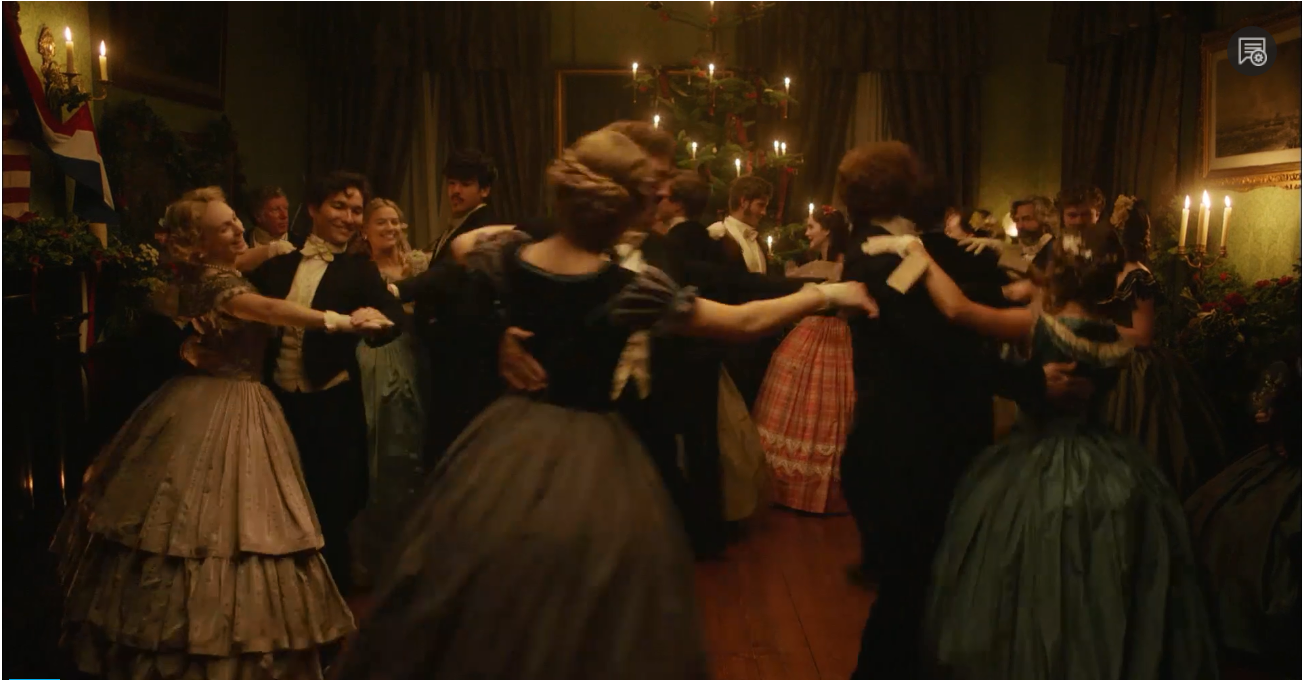
When the 2017 miniseries aired, there was one scene in particular that made me pause and re-wind during the first episode. That scene was the first party of the book, where Jo meets Laurie.

screenshot of the scene in Little Women on PBS, at about 16:17 in episode 1
The first dance in the scene is done to "Dodworth's Very Best Polka," a tune originally published c.1850 which the Commonwealth Vintage Dancers often perform to. Hooray!

Dancing was a frequent activity in the Alcott household, and we know from the family's letters (as well as letters written by their friends) that they loved to dance and attended dances often (although in every letter Louisa insists she doesn't know the steps, which I am greatly amused by). It seems only fitting that a few key scenes in Little Women take place at dances.

File:Houghton AC85.Aâ„“194L.1869 pt.2aa - Little Women, illustration 138.jpg
Illustration by May Alcott, 1869 (from Houghton Library)
Given my own first-hand (or I suppose, first foot!) experience with mid-century social dance, I thought I would share a bit about what dancing would have really been like if you stepped into Little Women. I started writing a series of posts on the topic...then had to finish grad school and plan a wedding, so the posts have been sitting half-completed in my "drafts" folder for literal years. Sigh. But now the Gerwig-directed movie is coming out, and I thought I should use that as some motivation to actually get this going!

I'm going to approach this in three parts: this post is a brief introduction to mid-19th century dance terms and other basics that will come up throughout the other posts in the series; next are the dances mentioned by name in the text of the novel; then I'll dive into the dances the Alcotts and their friends mention in their letters; finally, I'll wrap up with everyone's favorite "after party" (the German or Cotillion), which is briefly mentioned in Little Women but has more significant plot relevance in Rose in Bloom.

Let's get started with a little bit of dancing, shall we?


A couple of important things:
1. I apologize in advance for the often not-great dance footage...I don't have a ton of videos available! We did a couple of big 1860s performances several years ago, and recently created a series of overviews so that's the footage I have to work from. (shameless plug: see dancing live in technicolor by coming to a ball sometime!)
2. All of the dance information I'll be discussing in these posts comes from primary sources. Alcott letters and novel texts are of course the big ones for my particular selections, but what about the dancing? Let's start there.

Dance Descriptions and Dance Manuals
In the mid-19th century, dance teachers commonly published manuals on ball etiquette, basic dance posture and steps, and instructions for popular dances of the day. These books were a resource for learning new dances, and updated editions were often released only a few years apart. For the dances I'll describe, I'm primarily using publications by Elias Howe. He was a New England dancing master, and his dance manuals Howe's complete ball-room handbook and American dancing master, and ball-room prompter were both published in Boston, MA in 1858 and 1862 respectively. Since the real-life Alcotts and fictional Marches were all in New England for much of their lives I think these are appropriate for our discussion. (Yes, I know we'll hit Europe in the latter half of the novel--I'll discuss that when we hit those chapters.)

Dancing was also sometimes discussed in the press, both in coverage of particular events or in sharing a particularly hot new trend. We'll touch on both of these sources.

To set the mood, here is Howe's introduction to his 1858 dance manual:
"There is no scene in which pleasure reigns more triumphantly than in the ball-room...The music rising with its voluptuous swell, the elegant attitudes and airy evolutions of graceful forms, the mirth in every step, unite to give to the spirits a buoyancy, to the heart a gayety, and to the passions a warmth, unequalled by any other species of amusement."


Elements of mid-19th century Dancing

In the mid-19th century, there were three main types of dance setups*:
-contra (or country) dances: couples are arranged in rows (sometimes straight, sometimes in a circle) and dance with each other, progressing throughout the dance to new couples
-quadrilles: in America, these are usually done in squares of four couples (one on each side), and each part of the dance is repeated for the different people dancing
-round (or "couple") dances: one couple dances together around the ballroom; these are what most people now think of when they think of "ballroom dances"

The takeaway here is that there were many different kinds of configurations in which you might dance while attending a ball. And it was a lot to keep track of! So it's no wonder Louisa insists she never knows the steps.


a group of dancers performing the two-hand turn figure

Another important term to know is figure, which is the term for the different parts of a dance. Figures appear across many dances, which is kind of nice--if you know the "ladies chain" figure, you can get through it even if the dance you're doing is totally new. Since most contra dances and quadrilles are many of the same figures in different orders, it's much easier to pick up new dances than you might expect once you're comfortable with the bits...and also sometimes a lot harder to keep them all straight in your head.

The photo above is a figure from the Prince Imperial Quadrille--notice the square? Here's an example of a contra dance, called Soldiers Joy:


and a couple dance (this is a bit of polka from a choreography, which starts about 1:05 and ends at 1:30):


All of these styles would be on the same program during an evening, so you'd have a lot of options for different things to do. Here's an example dance list from Lincoln's inaugural ball in 1861, courtesy of dance historian Barbara Pugliese:
note: "lancers" is a particular genre of quadrille, with a really neat evolution...it's still done as a folk dance in several places today, including Denmark and the Caribbean. I actually attended a week-long dance program where the theme was lancers, just to give you a sense of the scope of stuff we could touch on. I'm only scratching the surface here!
So a mid-19th century person would have learned a basic vocabulary of dance elements, including figures (patterns that make up a dance), steps (how you move your feet), and variations (specific patterns of steps used in turning dances). Then they would have a repertoire of dances they knew completely (so the figures in order, etc.) that might change over time depending on trends and preferences among their social circle. Like spoken language a dance vocabulary can be combined in many ways, but if you've got the basics you can usually pick the rest up as you go. And like language, dancing has evolved over time--so while a lot of the terms may sound familiar to modern ballroom or contra dancers, the execution is different.

Some Other Notes
(or the things that didn't get their own section, but are worth noting)

  • Like modern social activities, dancing was enjoyed by people regardless of gender. While parts in a dance are defined as the "gentleman's part" and the "lady's part", there are many recorded instances of women dancing with women and men dancing with men. I will use the terms gentlemen and ladies throughout these posts to discuss the parts of a dance, but I wanted to acknowledge up front that even in the 1860s, that wasn't a hard-and-fast rule.
  • On a similar note, partners typically changed every dance, so you would dance with many people in a single evening. Howe states it is good manners for married couples to only dance together once or twice.
  • Dance cards or dance programs were popular for larger events, and often had spots to write in the name of your partner for that dance. Howe notes that it is impolite to ask someone to dance too far in advance--so the mad rush we might imagine to fill a dance card with partners right at the beginning of a ball is somewhat counter to the actual likely pace of the evening. 
  • Positions have changed over time, and the proper closed hold in the 1860s was low and rounded (different from modern ballroom form). 
  • The goal was (and still is!) to be sociable--smiling and enjoying the evening was more important than getting everything perfectly right. I think that's especially true for evenings described by Louisa, with good friends and cozy parlors full of lively people.

illustration from Howe, 1858
Alright, I think I'll leave it here. Do you feel prepared for the ballroom? Next time we're jumping in with the dances named in Little Women, so stay tuned!


*I'm keeping things pretty simple, so pardon the generalizations.

Sunday, February 17, 2019

Witch Winter

Last May when I was preparing for an adventure in Bath, I started exploring the early 1870s in depth to inspire an early bustle gown to wear to the ball. While researching I started to notice a particular color trend--especially in winter ensembles--that spoke to me.

Oh Victoriana on Instagram: “La Mode Illustree - 1871... #1870s #victorian #victorianfashion #antique #art #antiquefashion #fashion #design #artist #beautiful…”
La Mode Illustree, 1871 (via)
La Gazette Rose 1873
La Gazette Rose, 1873 (via)
1874 winter skating outfits, Ice Skating, Fashion plate
Illustrirte Frauen-Zeitung, 1874 (via)
La Toilette de Paris 1870
La Toilette de Paris, 1870 (via)
The green and gray are an elegant combination on their own, but that particular pairing has a special place in my heart as my house colors. And after seeing Emma's amazing Hufflebustle, I knew a Slytherin ensemble needed to happen. 

Image result for slytherin pride
(via)
I tried desperately to make this combination work for the Bath ball, but it turns out velvet and fur don't really work for May.


I ended up leaning into Tissot, which did speak to me for May, and for dancing, and put my house dreams on hold. But then in November I saw The Cursed Child (the Potter series sequel, written as two plays, which is currently open in New York City, London, and coming soon to several other cities), and it was back to Slytherinspiration for me!

with my house crest outside the theater


So I've thrown practicality to the wind and am putting my 1870s underpinnings to use again with a velvet and fur winter ensemble--short enough for skating, but dressy enough for future (less sporty) outings. And the timing couldn't have been better, because I've been in a rather witchy mood...and I don't mean that as a euphemism! Between Cursed Child and my other media consumption (I'm currently blazing through the second book in the All Souls Trilogy, and my sewing background show is Siempre Bruja/Always a Witch (English dub)) this winter, I'm having serious witch vibes.

I am immensely pleased with my progress on this so far, and I'm excited to share the finished version soon! In the meantime, I'll leave you with the insides...because really,  it doesn't get witchier than this.

bodice construction: you can see the gray argyll flannel lining on the pinned piece
pinning the facings: the neck and front opening are faced in textured acid green silk. I extended the bottom edge facing into a bag lining (over the cotton flannel that is flat lined with the velvet) to the waist. The flannel and velvet love to stick to each other, so the silk lets the long points of the bodice move over the skirts smoothly.

Pinning the bottom bag lining: an unintentional consequence of this approach is that the back pleats have serious body from the silk!
And with that I suppose I should get back to work so I can wear this before all the snow melts!


Thursday, August 4, 2016

An Adventurous Aside

My term is over today!! Two more papers to turn in and I'm home free to catch up on blogging and sewing and planning for some truly epic upcoming events. Whoo!

In the meantime, I am feeling truly grateful to be surrounded by friends who are wonderfully nutty and creative and talented...check out this video of us being ridiculous (edited into something coherent) for the moment, and I'll be back to sharing research and sewing progress in the near future!


Sunday, February 7, 2016

Pride and Prejudice and Zombies: A Review

After the recent Pride and Prejudice and Zombies ball at Arisia (my favorite local SF/F convention), a hellish couple of weeks, and the upcoming Regency ball this evening, a friend and I took a break last night to go see the new Pride and Prejudice and Zombies movie. I thoroughly enjoyed it, and was disappointed to see it mostly getting panned in reviews...so I'm offering my alternative (spoiler-free!) opinion on the topic.
If you're unfamiliar with the movie, I recommend this first trailer to get a feel for the tone:


To use a favorite word: it's wackadoodle. And that was utterly perfect. (I should also perhaps offer the disclaimer that I greatly enjoyed Hansel and Gretel: Witch Hunters, and my favorite book is Pride and Prejudice, so I am the exact target audience for this.)

the Bennett sisters in a promotional image for EW
The movie opens with a prologue scene explaining Netherfield's lack of tenant (until Bingley lets it) and introducing the zombie problem currently facing the British countryside, and offers a brief history of the current zombie apocalypse told through paper scenes reminiscent of 19th century toy paper theaters. It was these nods to the real Regency period that made me feel like the film team "got it," enabling the departures from period accuracy (such as the use of leather on a few zombie-fighting ensembles) to become deliberate bits of world-building and silliness.

a toy theater from the Bruce Museum
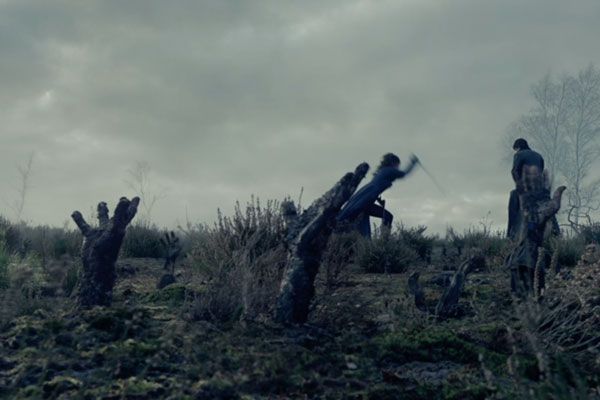
And there was quite a bit of silliness! I have to admit I haven't read Grahame-Smith's mashup novel the film was adapted from, so I can't speak to its faithfulness, but I felt the script did a solid job turning several iconic scenes from Austen's original work on their head without losing the heart of it. For example, Jane's illness at Netherfield is doubly tense because the flu is still potentially deadly (the technology of PPZ's Regency era is not upgraded from the real world--except perhaps in weaponry, but I can't speak to that), but also there's a chance it's not the flu, and Jane will emerge undead. PPZ's Elizabeth Bennet is still sharp-witted and exasperated by her family, but also much more physical, as she is a trained zombie warrior. Thus, several of Lizzy's most famous verbal battles (such as Darcy's first proposal and Lady Catherine's visit) are zombified by keeping the dialogue quite faithful but including physical sparring as well. As an Austen aficionado (to steal a phrase from Austenland) and an action comedy fan, I very much enjoyed this combination.

Lizzy tending to a weapon in her bedchamber, via Screenrelish
 I was also pleasantly surprised by the costumes. With the glaring exception of Lizzy's first ballgown, which looked like a rather tacky prom dress (and I'm convinced was only included so that they could use that scene for promotional stills and posters), the overall look was pretty good, with lovely printed cottons, fluffy chemisettes, bonnets and spencers or pelisses worn outdoors, and gloves at the ball. A particularly notable part was that all of the women were clearly wearing stays (in addition to several getting dressed scenes, where they were visible) as their silhouettes and the fit of their dresses looked believably Regency. Also, the girls fought dressed like that! There were several flashes that revealed the dresses were slit partially up a leg for easy access to thigh-holstered weapons and movement for kicking, but I liked that as a modification of their clothes to accommodate a zombified world without suddenly putting everyone in pants. I dance, climb fences, and run amok in Regency dresses frequently. It can be done! So that really pleased me. I'm assuming the designers also chose to replace the girls' petticoats with weird ruffled hotpants in the dressing scenes (you get some petticoat flashes during the fights) for the same thread--so the audience could see their fabulous thigh holsters--but they were my one really jarring complaint on the costume front. Because the underpinnings and cut of the clothes were so acceptable, it made the little zombified details (Darcy's long leather coat, Lizzy's leather-collared, paneled pelisse, some of the chemically-bright colors) feel like fun touches on a historical palette, rather than cringe-inducing weirdness. It helped that the designers also made sure such zombiefied touches appeared in scenes with actual zombie fighting, while more Austen-esque scenes, like balls, were more traditional.

Stays! (and weird hotpants, but oh well.)
Jane taking on a zombie in full Regency dress (via EW)

Lydia's pink pelisse is utterly cute, and the detail on Lizzy's sleeve (which is hard to see in this EW image) was really lovely
The plot also moved along at a quick pace, which served well to mask some of the really big plot issues, but resulted in the loss of some content from the original Austen (although in a 2-ish hour movie that's to be expected). Overall, I appreciated that the writers tried to have some sort of zombie-related plot (rather than just having there be zombies), but that plot was a little weak in the being well-plotted department. This didn't really bother me, as the film spent most of its time doing better, more Austen-y things, and the zombie plot bits were so short I didn't have time to care. The one other weak point was that some of the not-Austen language was jarringly modern. I can't even fault the screenwriters for this, as there's no reason to assume phrases like "zombie apocalypse" wouldn't have existed in an alternate zombie-infested Regency England, but for some reason hearing that sort of thing pop up stuck out to me. Is that reasonable for a movie that is literally setting Pride and Prejudice during the zombie apocalypse? Probably not.

zombies! (via Collider)
PPZ was silly fun, while managing to put together some truly awesome scenes that had me applauding and laughing along with the rest of the theater. It was really fun to see scenes I've read so many times given new "stage directions," so to speak, and I appreciated how much the film felt like it was made with genuine affection for the inspiration material--both the nods to the Regency period, and the nods to action movie tropes (slow motion fighting!). I will definitely be adding this to the list of movies I watch while I sew...it might even inspire me to finish that bonnet I started two years ago.


Wednesday, November 12, 2014

See our German!

"Germans," or cotillions, were evenings (or late nights) of dance games where attendees would shuffle partners, win small party favors, and just generally have hilarious shenanigans until the early hours of the morning. In Rose in Bloom by Louisa May Alcott, Rose (the titular character) describes the aftermath of such an event:
" I'm ashamed of myself when I remember what a romp that was and how sober Uncle looked as he let me in at three in the morning...my dress in rags, my head aching, my feet so tired that I could hardly stand, and nothing to show for five hours' hard work but a pocketful of bonbons, artificial flowers, and tissue-paper fool's caps."

As you might imagine, Germans are a lot of fun.

I've been traveling a lot and neglecting my poor blog, but I was able to make it home for the Commonwealth Vintage Dancers' Civil War Weekend, and Sunday we had a daytime German. It was loads of fun with a lot of giggling! I will have a lot more to say about it, but in the meantime one of the other attendees captured one of the games on film. Enjoy!


You can also read more about the history of the "German Cotillion" over at Recreating the 19th century Ballroom.

Sunday, July 28, 2013

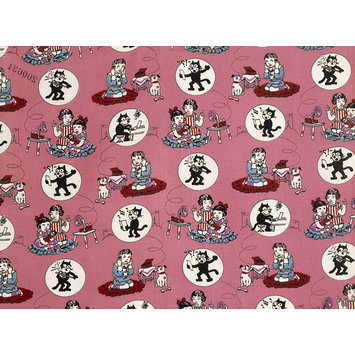
Felix the Cat, 1924

With the ball last night and the Crane Estate event last weekend, I am certainly learning to love the '20s. Today, while browsing the Victoria and Albert Museum online collections, I happened upon this printed dress fabric, featuring "Felix the Cat, children, and a dog."

Felix the Cat printed dress fabric, 1924. via the V&A
Printed cottons for summer dresses aren't new--in fact, I'll be posting later this week about my new printed 1860s summer dress--but there's something about this cartoon character printed that I love for its wackyness. (I also want to make dresses out of super hero cotton and science fabric, so this is hilariously close.)

According to the V&A:

"This dress fabric is demonstrative of the impact made by Felix the Cat on the popular culture of the 20th century...Felix debuted in 1919 as the silent star of short animated films. He was created by Otto Messner and the cartoons were produced by the studio of Pat Sullivan. His distinct personality, comic pantomiming and the surreal, ‘magical’ quality of the animation gave him international stardom."

I haven't come across any crazy printed dresses in my brief search yet, but I'm totally entertained by this print. If I ever see Felix the Cat fabric, now I know what to do with it!


Also, if you're like me, you'd never actually seen any 20s Felix the Cat cartoons...so I looked some up! Here's one that involves a book called "How to Be a Vamp":


Felix is so mean! Poor owner.

Friday, May 10, 2013

Faking It: 1920s for the 19th c. Girl

Last night was the premier of The Great Gatsby, and it was so much fun! Getting a '20s look together is always weirdly time consuming for me, and so I was thinking about that last night when I was getting ready. The 1920s in general, but especially the highly stylish flappers, have a very distinct look: bobbed hair, finger waves, pouty lips, and big eyes.
Helen Kane, epitome of the flapper look

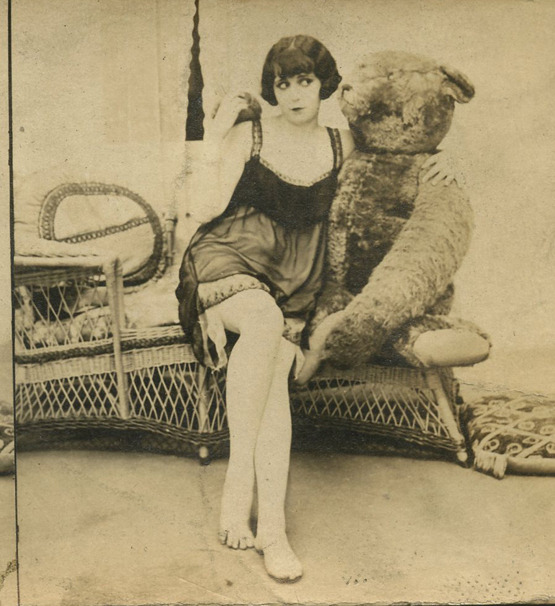
a kind of creepy 1920s card

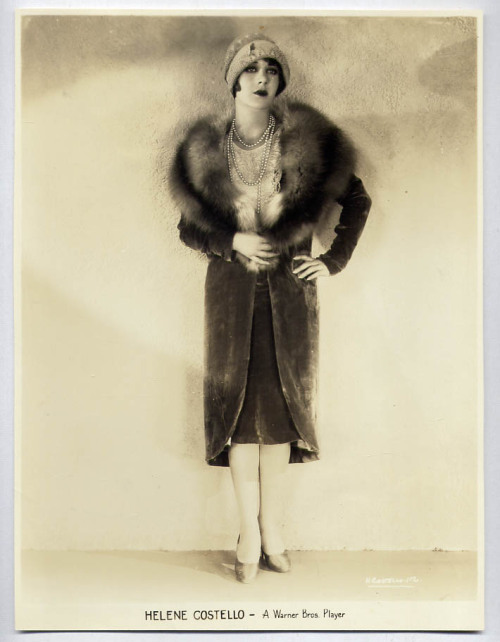
Helen Costello, an actress for Warner Bros. studios c. 1928

unknown model--check out those finger waves!
I still need some practice at my flapper fabulousness, but I'm excited to prepare for the Prohibition Ball in July. What I've found is that if your hair is short looking--minimized somehow if it's long--and your makeup is right, the aesthetic translates pretty well. Even though I will never have a bob or cigarette, there are some tricks to pulling off a '20s facade when the occasion calls for it.
terrible webcam selfie! my '20s look: big round eyes, pouty lips, (faked)  bob, finger waves
goofing off before our performance at the Somerville Theatre
I didn't put together a tutorial, and to be honest I went sort of minimal with my makeup for the performance (charlestoning under stage lights + dark eye makeup = me as a sweaty, drippy mess...ew!), but here is a list of some of the points about the flapper look that can really make it work!

1. Minimize (but shape!) your hair
There are two major categories for flapper hair: round and a little frizzy or slick. Both are fake-able with long hair, it all depends on your hair texture and preferences.

a slick wave
a sleek straight bob
fabulous frizz
I went for frizz by teasing the top of my hair into the proper rounded shape and pinning it at the base of my head. Once that looked right, I pulled fistfuls of brushed-out curls (a boar bristle brush can't be beat for things like this!) to the bottom of my head (and a little higher as needed for artful arranging) and pinned them however I liked. Pulling calmer hair back into a low bun (or two), or braiding and tucking the braid under can create a close-to-the head look without drawing attention to the fact you have long hair.

2. Finger waves!
The "S" wave is a classic part of flapper hair, and length doesn't matter! It's all about framing the face (and rocking your part, side or center).


Doing real finger waves is tricky, but super awesome! I cheated--not that you can tell, because my hair is curly and therefore doesn't look much different from usual. I created fake waves by brushing hairspray through my hair and using a wide-barrel curling iron. Starting at the scalp, I put the front section of hair on each side around the barrel, just enough so that the clip could close on top, and help it there for a moment. Once it seemed sufficiently rounded, I moved down the hair and repeated the procedure every other 2 inches or so. Curling every other bit gave the rippled effect of the wave without actually fighting my hair into finger waves.

3. Round wide eyes

This is a spectrum. Fake lashes (as long as they are even all the way across, and not thicker on the outside--this will make a "cat eye" shape) can work here, but are unnecessary. Dark shadow is good, but only if you want it. There are three important parts:
               (A) Line the top lid with black liner from inner corner to lid edge against the lash line. You can also stop a little before the outer corner to preserve a perfectly round shape.
               (B) Line the bottom inner lid edge (above your bottom lashes) with white liner. This makes your eyes look bigger, brighter, and a little dewy.
               (C) Line the bottom outer lid (below your bottom lashes) with black liner. I was using liquid so I went pretty thin, but going a little thicker (or tracing over your line in dark powder) is great too.

4. Pouty dark lips


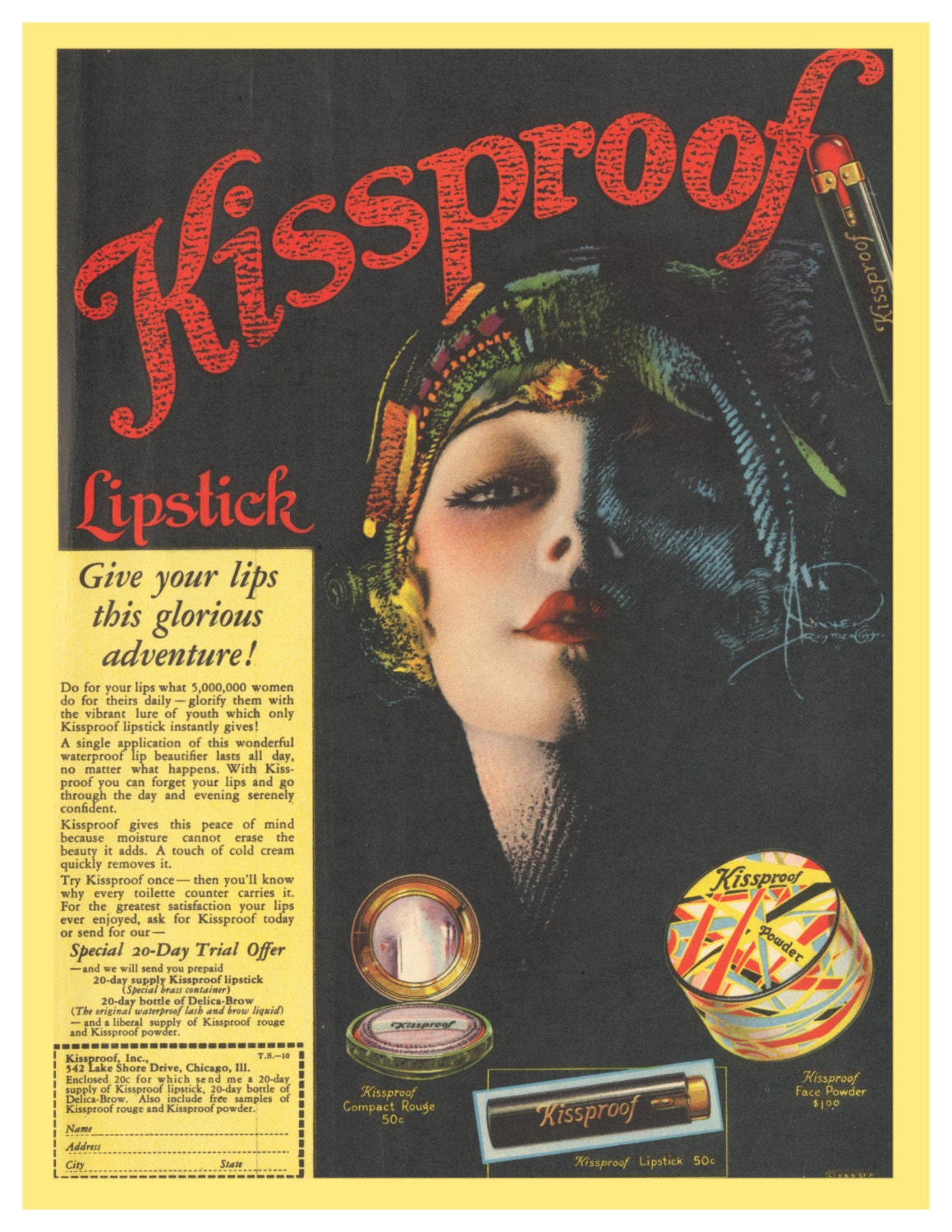
Most of the reference images for the period are black and white or sepia, so it's hard to tell what lipstick color to choose. However, there are some clues:

"kissproof" lipstick, looking pretty red
her lips look pink
and her lips look dark
It really comes down to a matter of preference. I tend to lean towards deeper reds and almost purples for '20s because I associate bright red so much with the 1950s and 1960s, and I wear it all the time. I also just like the way dark colors work as a counterbalance to dark eyes, creating that trifecta of dark makeup on a plain face that so reminds me of the flapper look.
Regardless of the color, the shape of '20s lips isn't just a natural mouth. Aim for a pronounced "bow" in your top lip and a smaller lower lip that is very full only in the center. I achieve this with stick concealer: spread concealer around your mouth and over the outer edges of your lips, blending towards your inner lips. Then use liner or the outside edge of the lipstick to trace the shape you want--an overdrawn top bow and full top lip (or less, depending on your feelings) with an underdrawn (I start to come in way early) bottom lip that is your whole lip only at the center bottom--then fill in with lipstick. Voila! A perfect pout!

5. Accessorize!

It was fashionable to wear hair accessories across the forehead or bangs instead of on top, like a headband. I think it's super dumb, but it is the easiest way to look like a flapper. I used some string sequins that i had on hand, but the possibilities are endless.

a simple band
all the bling, '20s style
6. Attitude
Really, it's all about the attitude. I am much more of a goof, and therefore tend to go for the Helen Kane look, but draw some inspiration from these bada** ladies.

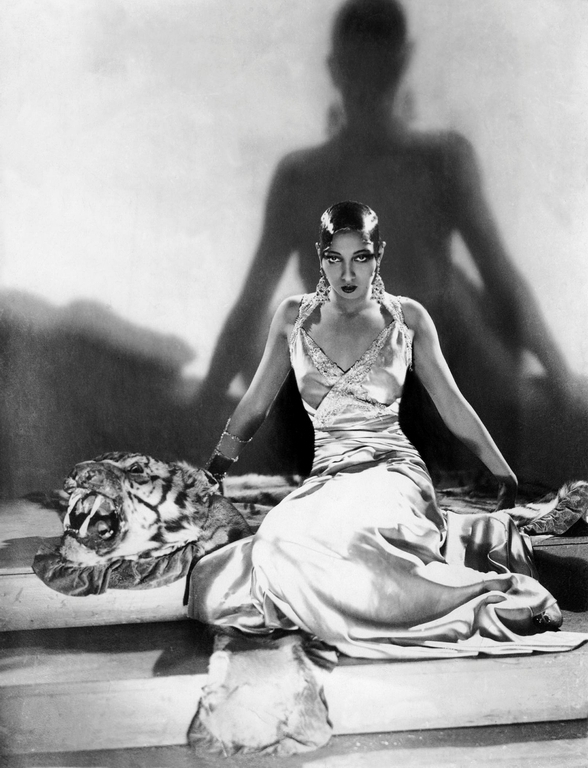
Josephine  Baker
Zelda Fitzgerald
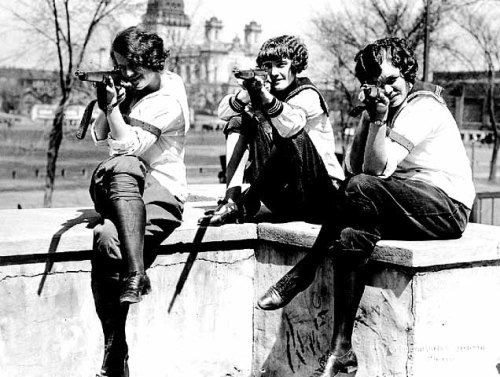
the Minneapolis Park Board girls' rifle team
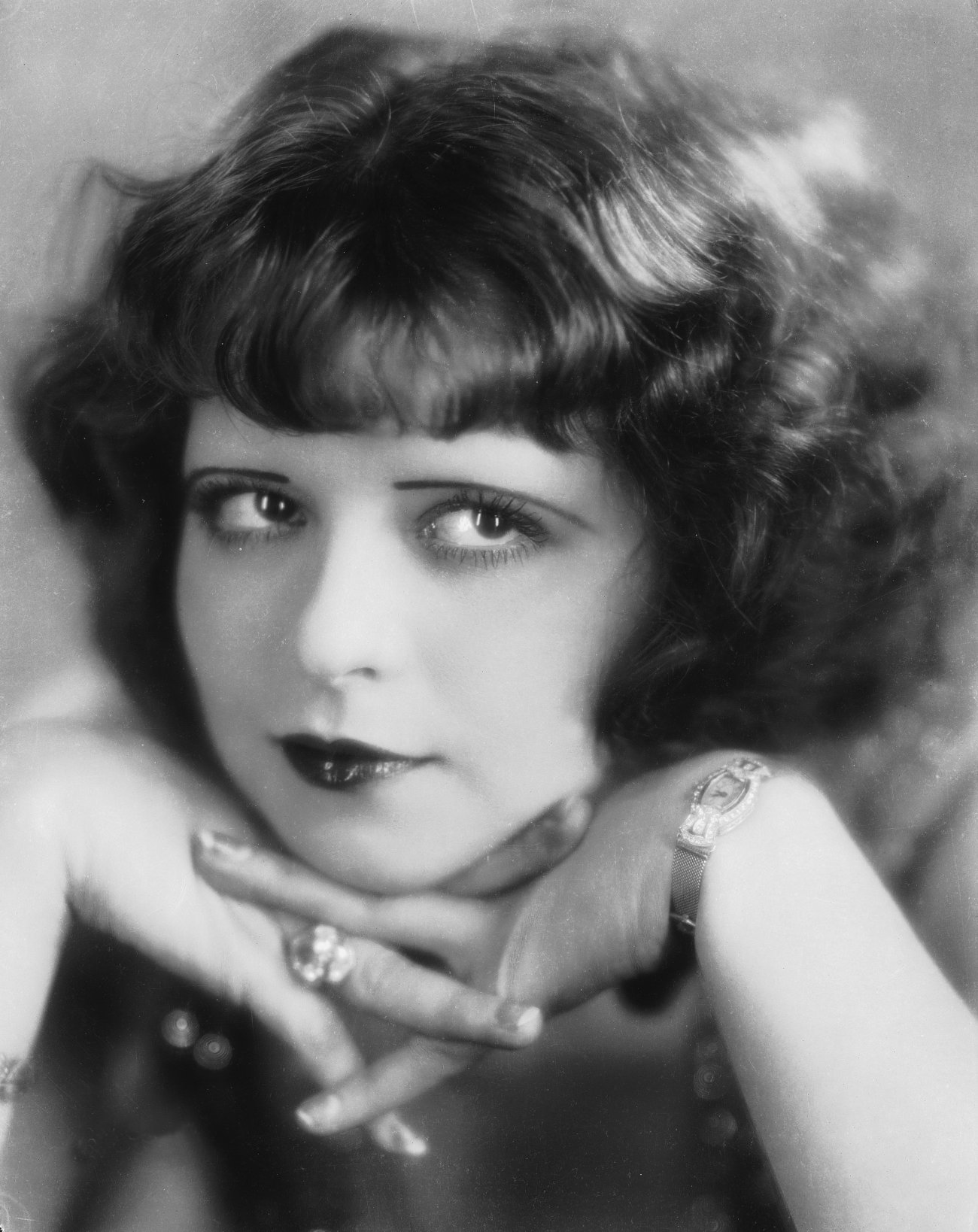
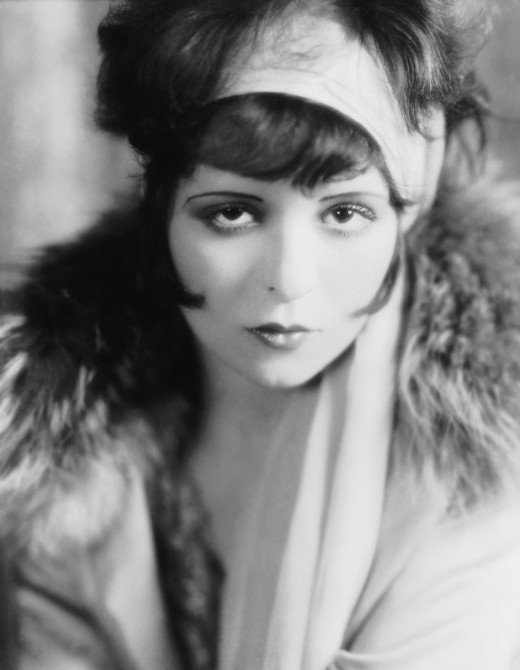
Clara Bow
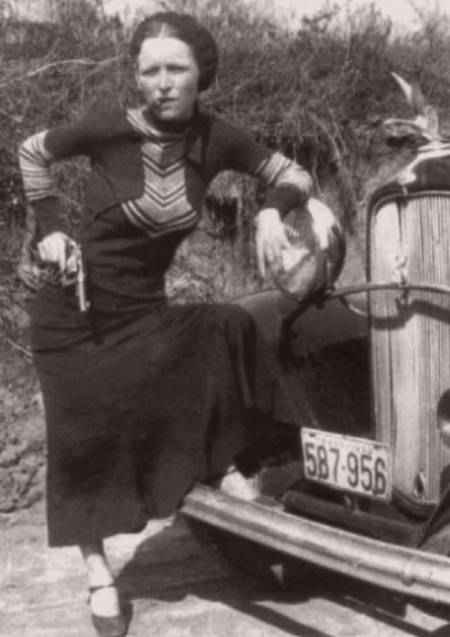
Bonnie Elizabeth Parker
(of Bonnie and Clyde)
one more Josephine Baker, because she is THE COOLEST

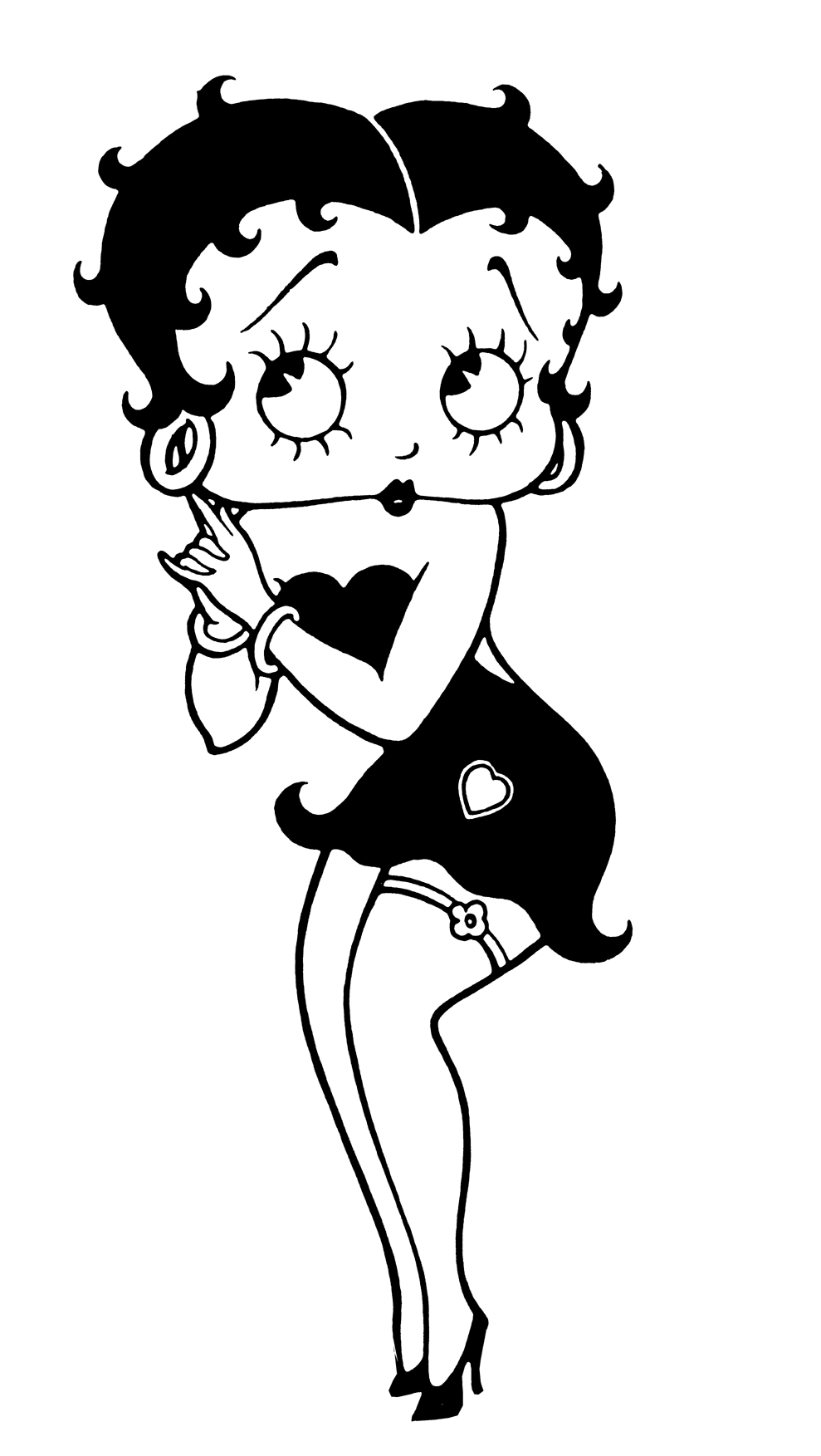
and Betty Boop! Wait...what?
Helen Kane: the "Boop-boop-a-doop" girl! (aka, Betty Boop)
I don't typically do tips/tutorial posts, so I hope this was helpful! If nothing else, be inspired to flapper it up if you go to see The Great Gatsby this weekend.