Tuesday, October 8, 2013

Last Picnic of the Summer: Performance at the Commandant's House

The National Park Service hosted an event in August to honor their volunteers, and brought the Commonwealth Vintage Dancers in to perform as part of the festivities. While they ate their lunch we had our own Regency picnic, did a little dancing on the lawn (including one truly death-defying...or death-tempting...jete waltz on the grass!), and then eventually went inside to do some more serious dancing. We met up with some new friends and had a wonderful time!

In case you missed my last post, we also looked pretty spiffy!

 But the real treat was that when we weren't eating or performing, we played graces! I've mentioned graces here before, but it never stops surprising me how much fun I have when we play. This time it was especially exciting, because there were a bunch of us and a bunch of hoops in a big circle. Before we tossed a hoop we would shout the name of the person we were tossing it to in order to get their attention. Sometimes it worked, and sometimes it just resulted in really funny faces and near misses.

Even though it's October, I couldn't pass up sharing a last summer adventure. Not one with such silly people!


our picnic, yum!


Inevitable, one of the hoops got stuck in the tree

in the house after dancing was over. The light through the curtains was so pretty!

Wednesday, September 18, 2013

The Magical Disappearing Woman

Sometimes getting the perfect "period" image requires a lot of modern technology.

I've been out of town more than I've been in it this month, so my non-work life has been on hold...but I do have a post in the works!

At the end of August I participated in a lovely performance at the Commandant's House, and we had a picnic on the front lawn. Someone got a picture of us, and it is perhaps my favorite (certainly one of my favorite) shots from the summer! Don't we look like a period painting?


I was so excited about this picture....but this isn't what it looked like when it was taken. In the original image, we were "crashed" by a person in the background. Of course, photos often have people in the background, but it's a little more jarring when there's such a difference in attire. Always on the quest for perfect pictures (and an excuse to sharpen my Photoshop skills), I worked on removing her.  Here's the original image:

See the woman in the background?
So there you have it. Some fabulously-dressed friends, a beautiful day, a candid shot...and some post-production magic all add up to a really lovely image. 

Stay tuned! The rest of the day is coming soon.

Saturday, August 24, 2013

"The Glare and Glitter is Brutal": Chemical Dyes and Plaids of the Mid-19th Century

It's been absolutely ages since I did a tartan post, and with fall approaching (not that it feels much like fall today!), I've been eyeing my closet full of mini-kilts. For the rest of my tartan in fashion series, click the link or use the tag cloud to explore!

Where we left off, Queen Victoria had fallen in love with the Scottish Highlands and created a fad for "clan tartans," trips to the Highlands, and tartan gowns...but there was another actor at play in the mid-nineteenth century that contributed to some of the more wild and crazy and fabulous patterns of the period: the rise of chemical dyes in fashion.
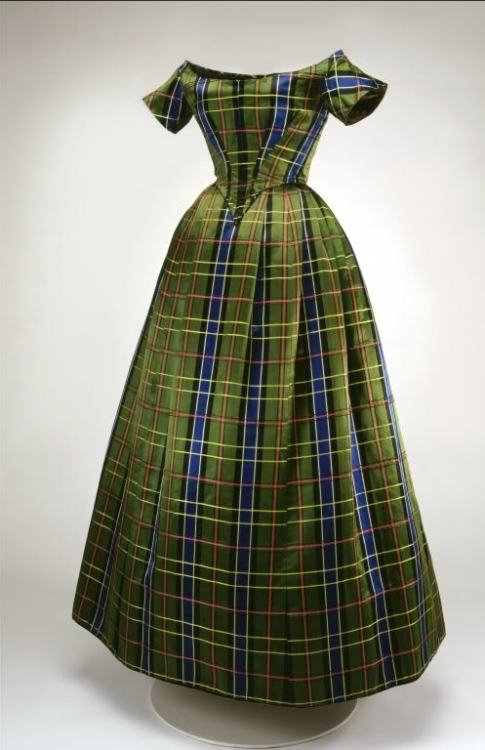
plaid gown (with evening bodice), Musee McCord, Montreal
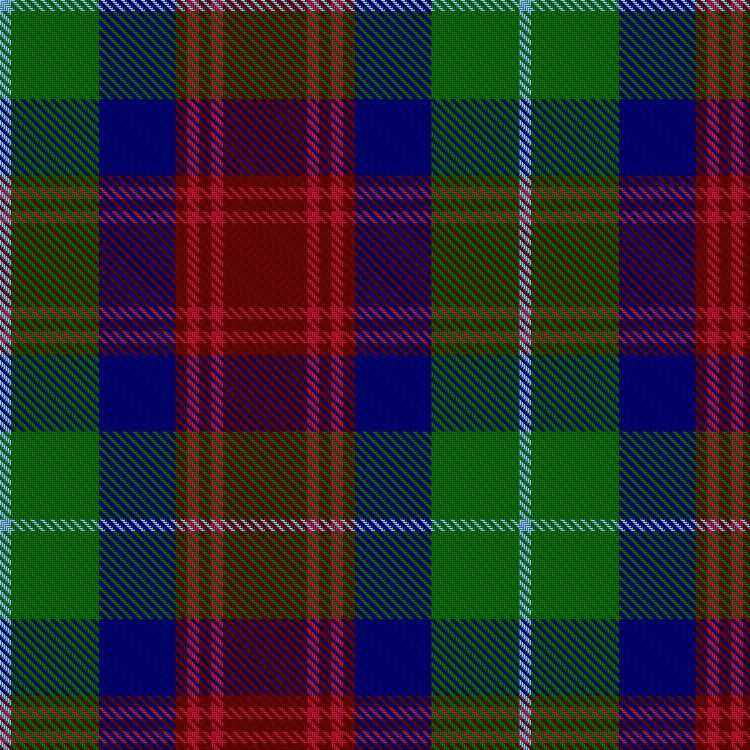
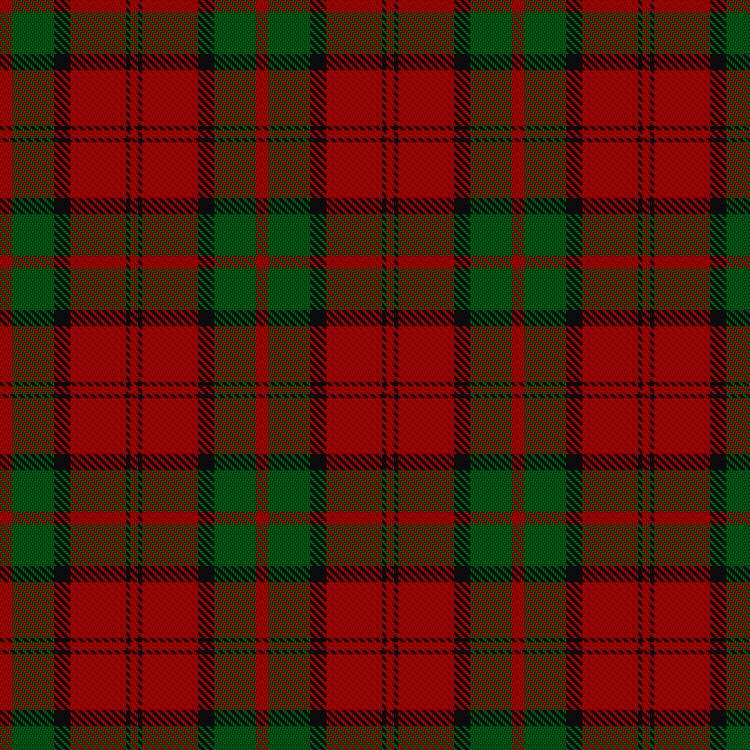
Now, a lot of these dresses weren't tartan--or even trying to be tartan--but the craze for tartan at mid-century is certainly cousin to the wild, rich colors available. While a lot of tartans have subdued or dark setts (especially in their hunting versions), there are also many many tartans that fit the bill for wild and crazy.
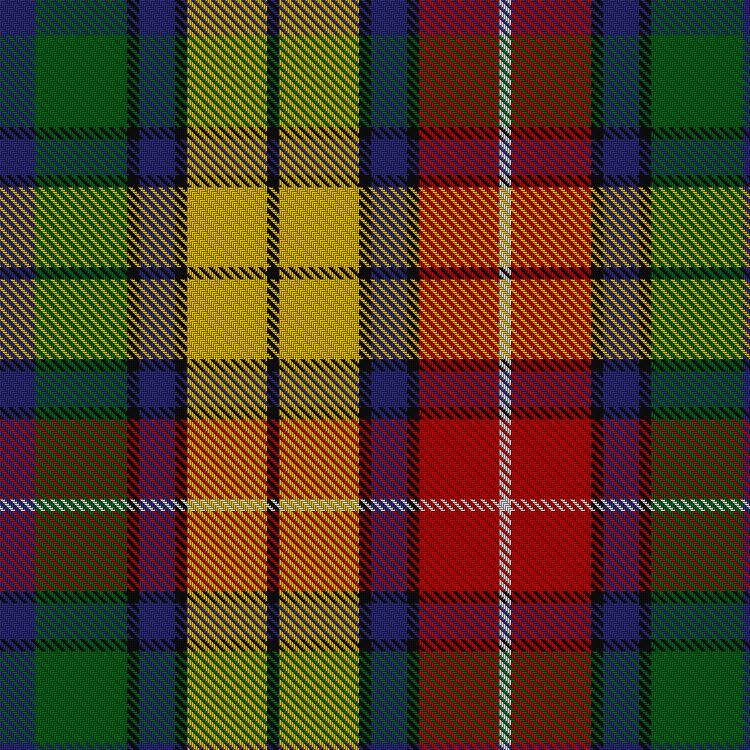
Buchanan Clan tartan, registered 1850
Akins Clan tartan, registration thread count from a pair of trews c. 1820
Dunbar tartan, 1842 (there's an alternate sample dating 1850 for the same sett)


Talk about loud! They almost make dresses made entirely of Victoria's Royal Stuart (a quite popular choice at the time) seem downright subtle.

day dress, 1860s, in Roysl Stuart with green trim
While variations on many colors could be produced prior to the 1850s, it wasn't until then that the particularly loud colors of chemical dyes became available and popular enough to inspire some truly screaming dresses.

In 1856, William Perkin (a student in the laboratories at the Royal College of Chemistry), began a project to investigate synthesizing quinine (used to treat malaria and a fairly new discovery). While his experiments failed, Perkin discovered that his not-quinine synthesized chemical turned fabric purple, and did not appear to wash out or fade in the sun. He sent the dye to well-respected colorists in Perth, Scotland, for evaluation.
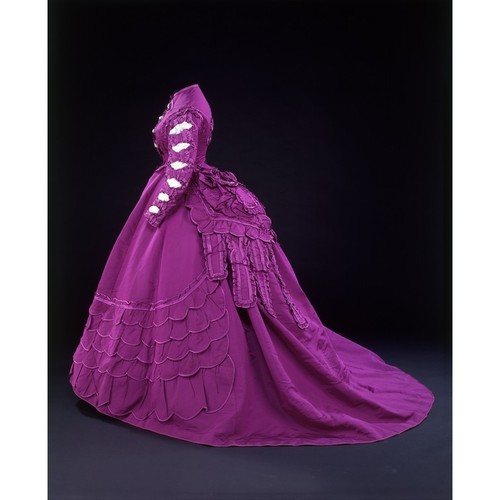
Patented in 1857, Perkin's dye of aniline sulphate and potassium bichromate became one of the first popular chemical dyes, "for dyeing with a lilac or purple color stuffs of silk, cotton, wool, or other materials" (from the patent). The color became known as mauveine, or "Perkin's Mauve."

letter from Perkin's son with a sample of dyed silk
a stunning late dress, c.1870, dyed with mauveine

Perkin's Mauve was all the rage. Charles Dickens wrote in 1859, “As I look out of my window, the apotheosis of Perkin’s purple seems at hand – purple hands wave from open carriages – purple hands shake each other at street doors – purple hands threaten each other from opposite sides of the street; purple – striped gowns cram barouches, jam up cabs, throng steamers, fill railway stations : all flying countryward, like so many birds of purple paradise” (from All Year Round).

Around the same time, aniline was also used as a base for a new red dye, called fuchsine (1859). A blue dye from aniline was next in 1863, and with it came a major breakthrough. Made by heating chemicals and mixing them with the red aniline dye, chemical analysis of the aniline blue determined that a similar process (called "alkylation") could be used to create many other colors as well.

a lovely aniline blue dress

red silk boots, c.1865-75 made with red aniline dye

And with that, brighter, wilder colors were all the rage. Written in 1869, this description of England is perhaps my favorite. English fashion included ‘violet dresses of a really ferocious violet, purple or poppy red silks, grass-green dresses decorated with flowers, azure blue scarves and dresses of purple silk, very shiny so that they reflect the light dazzlingly...The glare and glitter is brutal.’ I want to be brutally glittery. New life goal.

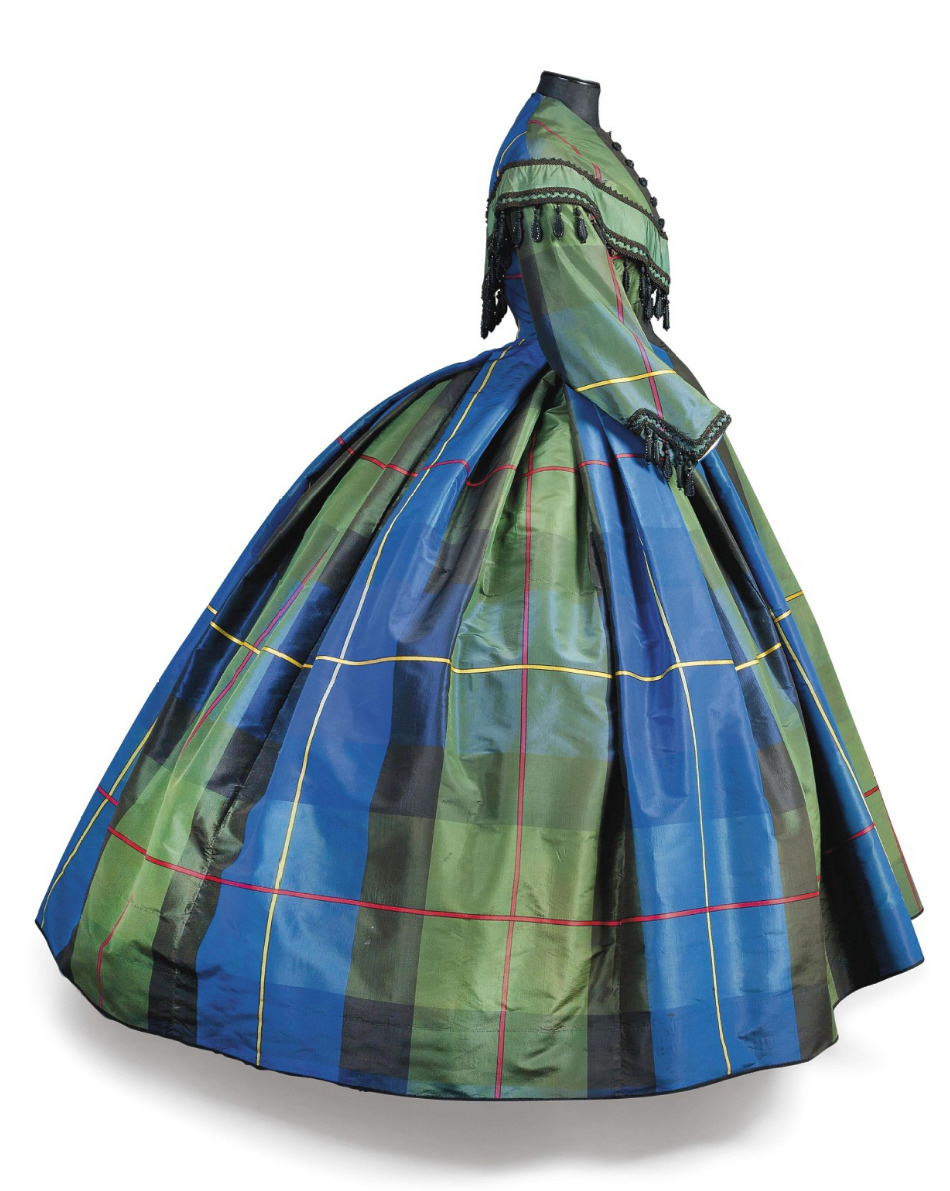
The bright colors afforded by aniline dyes (as well as other chemical variations) opened up a world of fashionable possibilities.Perhaps most importantly, this type of chemical dyes was more colorfast than older methods, meaning it was much less likely to run or bleed--and could therefore be used in patterns.
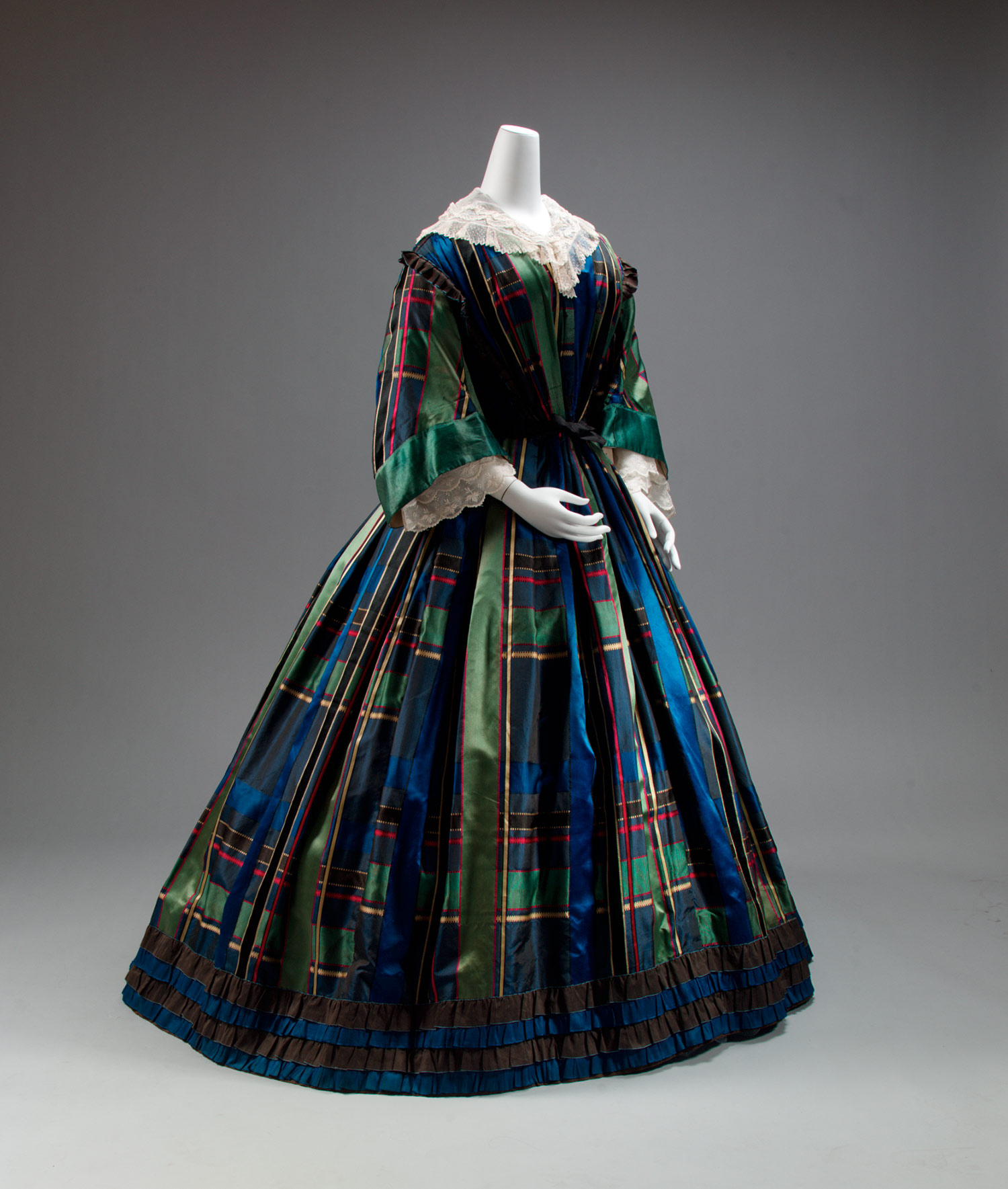
plaid day dress, 1857, made with chemical dyes (Met Museum)
late 1860s plaid silk dress, auctioned at Christies
satin plaid, 1860s, via Museum of Fashion, Bath
plaid wrapper, 1860s
The rise of chemical dyes made bright colors accessible to a large audience, and combined with the popularity of tartans to create a whole new breed of plaid. While tartans had been bright and colorful before aniline, now it was possible for the combinations to become trends. While muted colors did come back into fashion relatively soon, the penchant for bright plaids stuck around. Why wouldn't they? Those are some truly fabulous dresses.

plaid dress, 1878 (LACMA)


Sources!

For more about chemical dyes, check these out:

Morris, P., & Travis, A. "A History of the International Dyestuff Industry." American Dyestuff Reporter, 81(11), 1992. 
Fukai, A. "The Colors of a Period as the Embodiment of Dreams." Fashion in Colors, Kyoto Costume Institute.
Forster, S. & Christie, R. "The significance of the introduction of synthetic dyes in the mid 19th century on the democratisation of western fashion." Journal of the International Colour Association, 11, 2013. pp.1-17.
Greenfield, A. A Perfect Red. New York: Harper Perennial, 2005.

Thursday, August 15, 2013

SMASH.

After the two-outfits-in-a-week 1860s/1920s sewing marathon from a couple of weeks ago, I needed a change of pace. So I switched gears (and machine settings), and started working on a costume for Boston Comic Con, which was held last weekend at the Seaport.

taking a break outside the convention center
The con was supposed to be in April, but due to the Boston Marathon bombings and the lockdown, it was rescheduled. Honestly, I think the re-scheduling might have turned out to be good, as the Seaport (not the original location) was a bigger space and I can't imagine what 15,000+ attendees would have felt like in the Hynes (the original location)--it was packed enough as it was!

There were some definite administrative issues (I ended up waiting in line for 2 hours on Saturday to pick up my wristband), but overall I had a good time and got to meet a bunch of other local comics fans, which was super fun. There were some great costumes, and great shopping!

Over the two days I got a chance to practice some photography skills (and being less awkward when asking people for photos, haha), which was great and while I didn't take a lot of pictures, I did get a few shots I was really happy with.

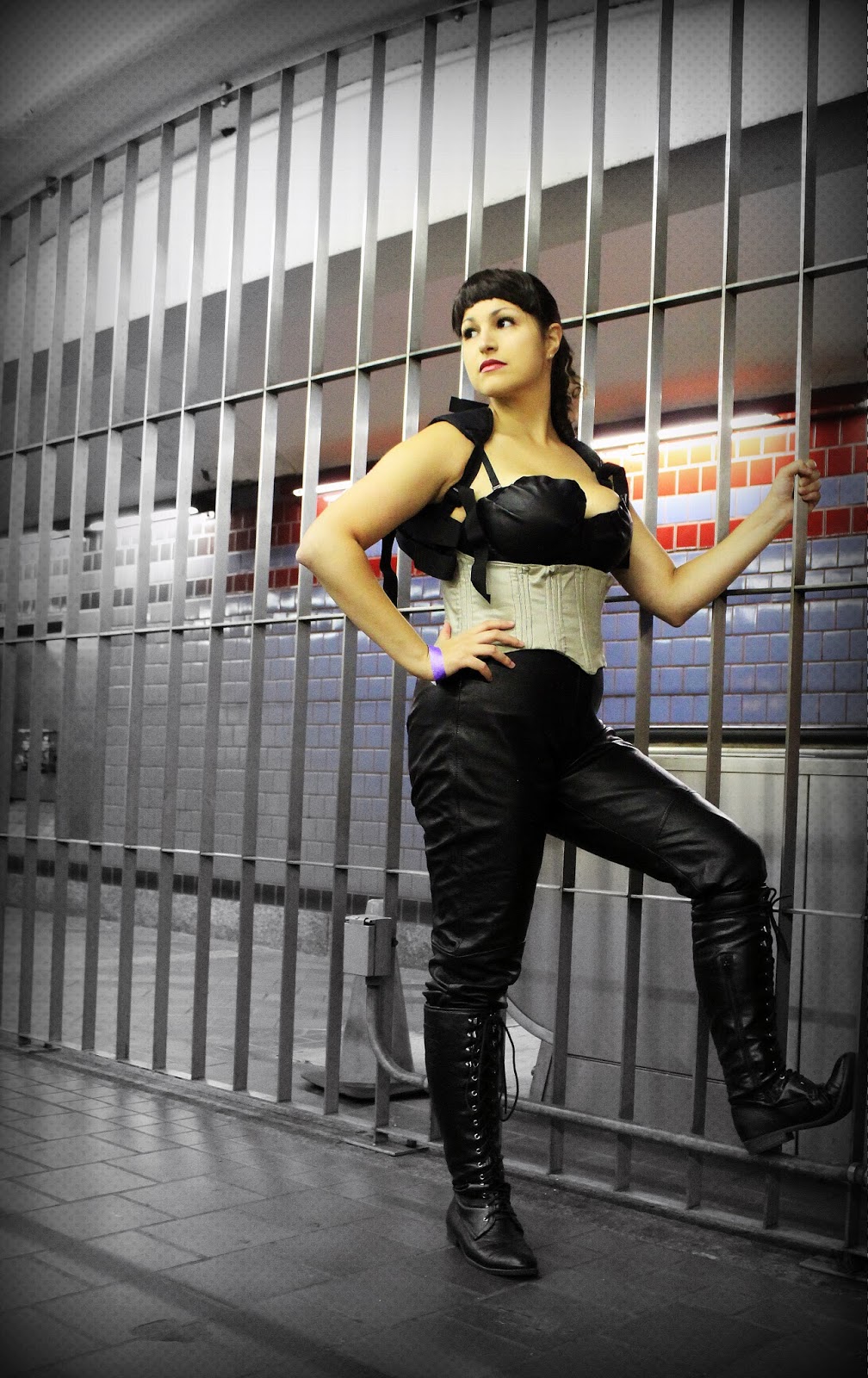
I was also pretty happy with the costume I made. Starling, also known as Ev Crawford, is one of the only characters created in DC's New 52 that I am excited about (even if they've benched her now...sigh.)--she's tough, smart, and has a 50s/rockabilly style that I love.


sketch by Jesus Saiz, the artist who drew Starling (left) in Birds of Prey


Once again, my historical costuming skills came in handy. The grey corduroy underbust corset is based on my 1860s corset (and still needs some adjustments, so I'll draft a new one for NYCC in October), and sewing the same way. The only changes are thinner bones, sewn in sets of three, and hook and eyes up the back instead of lacing (with no front busk). This turned out to be way more secure than I was expecting, probably due to the real, solid boning instead of the cheap plastic stuff that comes in modern Victoria's Secret-style pieces.

The black top is a cheap bra that I covered with goat hide leather, the leather pants and gun holster came from Ebay, and the boots were borrowed from my little sister (who came to BCC with me).

The bangs are also from Ebay, and worked out way better than I was expecting thanks to a good trim by my sister the night before.

I felt like a badass, which was the point, so...costume mission accomplished! I'm excited to make a few adjustments and wear this to New York Comic Con in October.

But enough about my Sunday outfit...on to the rest of the con!

On Saturday we went as Julia's Blingvengers--all the dresses were made by her, and my friend Brooke came along as our female Coulson, which was perfect.


just one part of the entrance line


I love being Hulk :) Dress by Julia!


inside, Spidey and Green Arrow consult the map...


our Cap meets a pretty realistic Cap...his shield was NICE. As was the rest of his costume!

 On the way, we also made a side trip to Antonia's lab to drop off some stuff, and i found the radiation safety guide...

this would have been good to know...

"I am looking for the Mandarin."

as far as I know this hasn't happened....but it TOTALLY COULD.


home-made rocket boots!


he even had the Bane voice...and it was eerily spot-on

Bane was challenged by Supergirl! But even he couldn't resist her adorableness and spunk