We went on a castle adventure, so there had to be magic.
Friday, May 21, 2021
A Little Photoshop Entertainment
Saturday, May 8, 2021
The Return of Witch Winter: A Journey to Bancroft's Castle
At the moment I'm sitting on the floor of a hotel room trying to coax my cat to come out from under the radiator...so I figured I would entertain myself (and hopefully all of you) with a sequel to a 2019 undertaking. (Thus the very extra title. I am amused at least!)
A pact, some magically perfect weather, and the ruins of a stone castle hunting lodge - definitely the tagline to a movie right?
Not a movie, but a very good adventure, which is better I think.
The prologue:
Several years ago, a friend made a Hufflepuff bustle ballgown, and as I was doing research to make my own 1870s ballgown I started noticing green dresses with gray trim popping up quite frequently in fashion plates. As a Slytherin I'm partial to this combo anyways, and with Emma's dress on the brain I decided I wanted my own house bustle dress. But I also got my heart stuck on doing a velvet and fur ensemble, which....doesn't really lend itself to a ballgown. So instead I abandoned the ballgown idea, and decided that I would make a winter dress at a later time.
That time became winter 2019, (aka "witch winter" because I was also on a bit of a witch-based novel kick at the time). I finished the project in March, which was too late to go skating or have enough snow for good photos. Then late 2019 into early 2020 was insanely busy and I was travelling, and I didn't have time to do a photoshoot. And by the time I was grounded, the snow was gone again.
Cue the pact. Quinn at The Quintessential Clothes Pen had also recently completed a wintery bustle ensemble, and needed photos as well. So with lockdown keeping our weekends very free, we vowed that the next weekend when there was good snow for photos, we would do a photoshoot. We actually scouted locations in advance (it was nice to get out and do some hiking), so we knew exactly where we wanted to go: Bancroft's Castle, a 20th century estate-turned sanitarium-turned hunting lodge that burned down in 1932 and is now public land. (And an off-topic fun fact: if you hike up to the castle and look out over Gibbet Hill, it may look familiar...because it was one of the filming locations in the 2019 Little Women movie.)
The Adventure:
During the week it snowed, and Saturday dawned crisp and clear. It was a perfect New England winter day, with bright sun and low temperatures, and I was totally warm! Between the cotton velvet, flannel interlining, and silk lining, I was plenty toasty. The only cold part of me was my hands, but I have notoriously bad circulation and that happens in modern clothing too.
(I did cheat and wear modern snow boots, because we were hiking up a hill and I honestly didn't want to get my historical shoes dirty.)
This was essentially the first outing for this outfit, and it was so fun to get to finally wear it!
Now I just need to finish the cape I was making to go with this...I suppose that's an excuse for a trilogy. Maybe by next winter!
Saturday, March 20, 2021
The Great Pickled Limes Picnic of 2020
Well then.
I've gotten a few comments recently asking how my pickled limes experiment ended, and I did make sure to carefully document results! But between *waves hands* the world and computer issues my inclination to write about pickled limes on the internet took a bit of a hit. And things on the world front haven't really improved, but my computer issues have been resolved! So no promises I'll post with any frequency, but I think I can promise I will post at least sporadically.
Anyways, on to the main event: how did the pickled limes turn out?
When I envisioned opening the limes and trying them out, I had grand visions of discovering a long-forgotten delightful snack...
But I am sorry to say that they ended up aligning more with the historical sources deriding them as an "acquired taste" only adopted by Bostonians.
That is overreacting slightly - they weren't all terrible. And there were still some decided differences in how they tasted! Science is cool, guys.
To help with the tasting portion of this project* I had the help of an esteemed panel of judges. We wore masks except while actually tasting, and stayed outside with ample space between our picnic blankets. Luckily we had a truly fantastic early October, so the weather was worth enjoying!
Let's dive in:
Our Least Favorite: Plain Brined
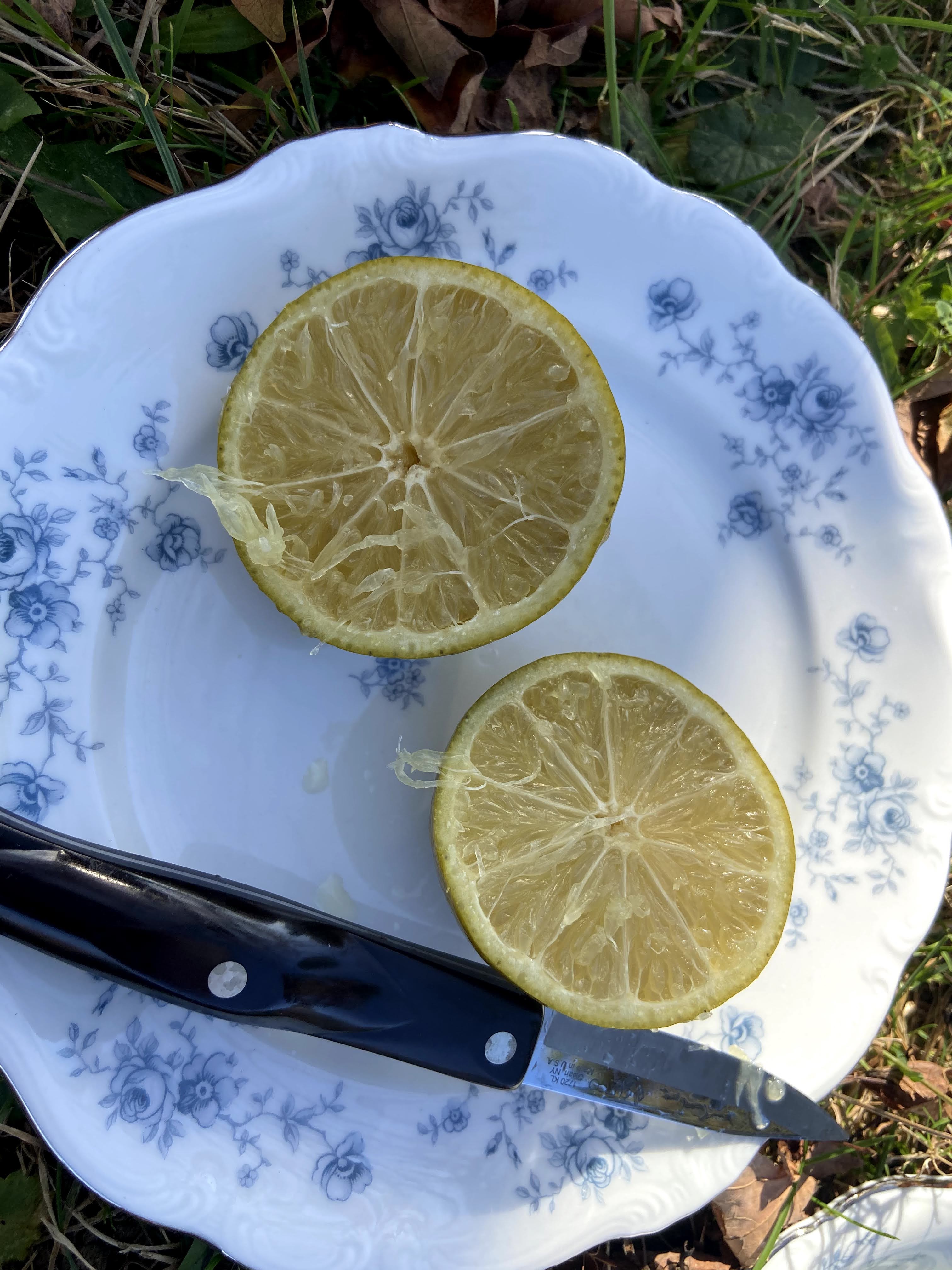
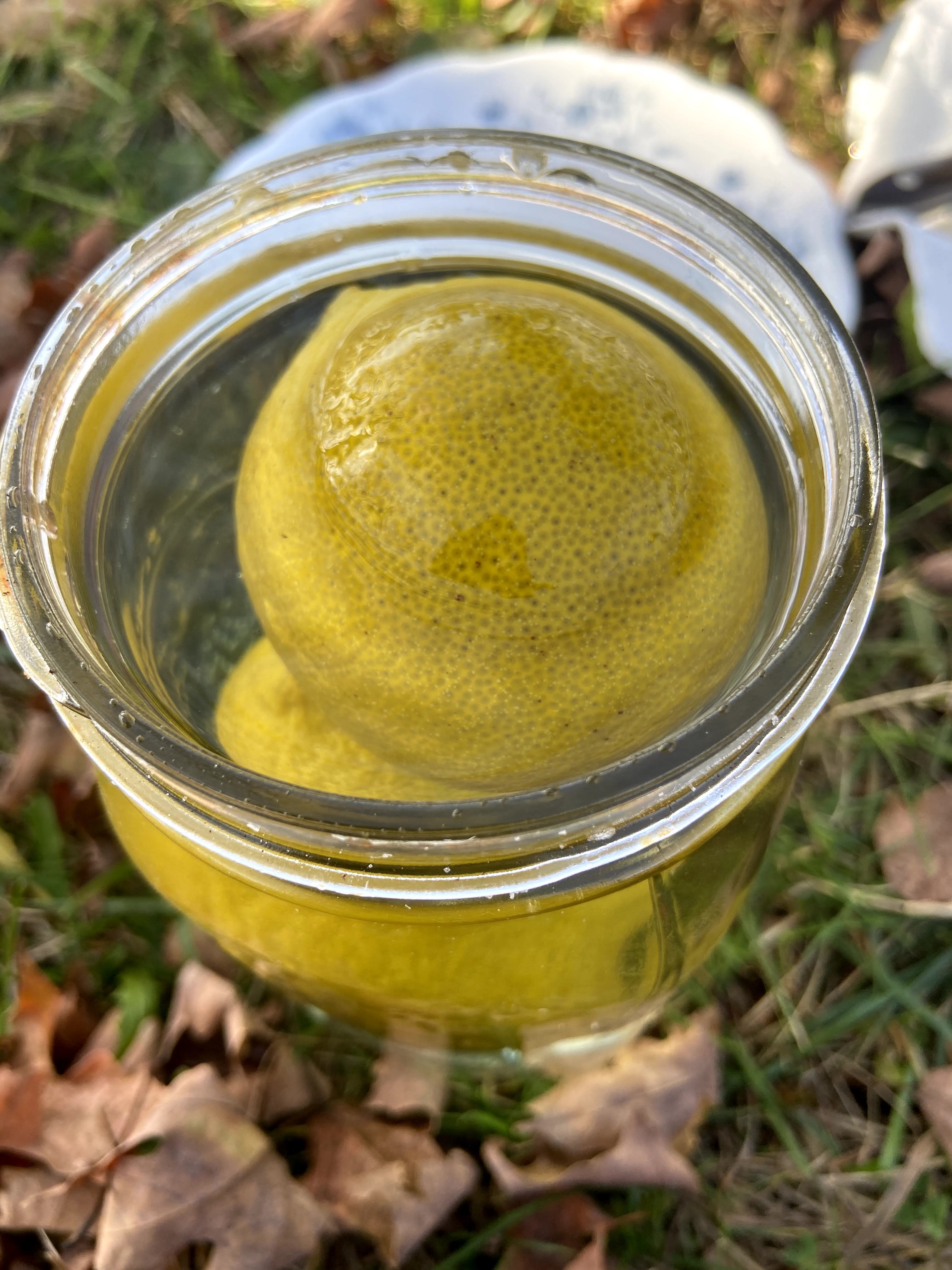
The plain brined limes surprisingly didn't smell like salt! They smelled...sort of floral?
From the panel:
"It smells like the toilet bowls in the Old Town Hall"
"It smells like 1950s chemical cleaner"
The taste was more salty, as I would expect given they'd been brined in salt water. I was expecting salt and sourness, but it actually wasn't sour at all. It tasted salty and organic - a little floral and musky.
The panel was more positive than I was, actually:
"I'm not hating it."
"Once you get past the initial salty awfulness it's ok"
"It has a musky floralness"
Runner Up: Spiced Vinegar
This was my favorite of the bunch, because the punch of the vinegar overpowered everything else. I like vinegar! I do think if I ever tried this again I would use more spices though.
The panel was more mixed:
"That one hits you hard"
"I don't taste any lime whatsoever"
"No toilet here!"
"The peel is pretty nice"
The Winner: Sweet Vinegar
I expected to like this one the best but in the end I think I liked it without the sugar.
This one got the panel's vote though:
"This one is actually quite good"
"It's different, I don't know that I like it?"
"It's not bad!"
So there you have it! I am calling this a successful experiment, because now I have tried them. Would I make them again? Probably the sweet vinegar batch, with more spices. And I'd probably serve them with something. I used the same recipe (originally from an 1869 fruit pickling book) that I used for the sweet vinegar limes to pickle peaches over the summer, and those were delicious! Especially with manchego cheese and crusty bread.
When limes are next in season, I may try again with slightly different ratios (and try a batch where I pickle them in vinegar right away, instead of brining them first). But we'll see - for now, I think my appetite for pickled limes is satiated.
*Note: the salt-packed limes didn't make it to tasting. I ended up with something growing in there and it wasn't worth giving my friends botulism in the middle of a pandemic :(
Sunday, May 31, 2020
Pickled Lime Brine; or, how salty was the ocean in 1868?
One of the first articles I saw when I went looking for information on seawater was that seawater composition shifts over time, and a lot of those shifts are due to environmental changes (hello again, global warming). So then I wondered: how much has seawater changed since the mid-19th century?
It turns out, there's actually a wealth of information on ocean temperature, salinity, etc. at multiple depths. Scientists wrote and published about both the makeup of the earth and the ocean throughout the middle of the century, but the records of ocean information that continue to today began in roughly 1870 when the H.M.S. Challenger set sail.
![]() |
| image of the ship, via the Smithsonian Library |
Considered the start of modern oceanography, the Challenger voyage from 1872-1876 was specifically intended to collect data on features of the ocean--the first mission of its kind. During the five year voyage, the crew of the Challenger collected data on ocean currents, sea floor topography, marine life, and components of the water (e.g. temperature, chemical composition) at various depths. Over its 4-year voyage, the 6 scientists aboard discovered over 4,000 new species and many new elements of the ocean floor--including the Marianas Trench.
![]() |
| the laboratory aboard the H.M.S. Challenger, via Dive and Discover |
As you might imagine, there's a lot of data in the Challenger report. And much of it has been digitized, which is really cool! In fact, NOAA (the National Oceanic and Atmospheric Administration) has documentation of ocean data from 1870 through today, including for the Challenger expedition. But as you also might imagine, not being a chemist it was kind of difficult to just find the one number I wanted.
![]() |
| Sir C. Wyville Thompson, one of the zoologists aboard the Challenger and authors of the Challenger Report on ocean chemistry |
One last internet search to figure out how many cups of water and salt I would need for that ratio (and a little rounding later), I settled on 4.5 cups of water to 2 tablespoons of salt. And I was off!
![]() |
| illustration for Little Women chapter 7: Amy's Valley of Humiliation |
SOURCES:
Higgins, 1858
The Challenger Report in full
Physics and Chemisty, vol 1
Salinity at Ocean Sciences
Early Determination of Salinity
NOAA Historical Data Index
The Challenger Expedition, Dive and Discover
H.M.S. Challenger: Humanity's First Real Glimpse of the Deep Oceans, Discover Magazine
Then and Now: Oceanic Expeditions, NOAA
Monday, May 25, 2020
The Pickled Lime Project begins; or, more than you ever wanted to know about pickled limes
![]() |
| from The Telegraph |
![]() |
| the kitchen at Orchard House--this is not where I had campers make treats though ;) |
What were pickled limes, and why were they popular?
When I was in elementary school (aka "Amy's age"), everybody wanted snap bracelets--pieces of warped plastic with patterns and textures on top that would curl around your wrist when you whacked the taught plastic against your arm. Why??? Kids are weird, and I think that's pretty much always been true. And while no amount of research can explain weird kid fads, it's still worth noting that much of the information available about pickled limes comes from import tariff documentation, as pickled limes were being imported from the West Indies (what we would now call the Caribbean). These congressional committee transcripts date both from the early and mid 19th century (where there are long accounts of what was imported and how much the taxes were), and from late 19th and early 20th centuries (when there were changes in import tariffs and a lot of debate over how much pickled limes should be taxed). Other sources include fictional works (such as Little Women) that mention pickled limes, and a few recipes...but there really aren't that many recipes. My hypothesis for this is that pickled limes weren't something typically made at home during the 1860s; as Amy mentions, pickled limes could be purchased individually in general stores.
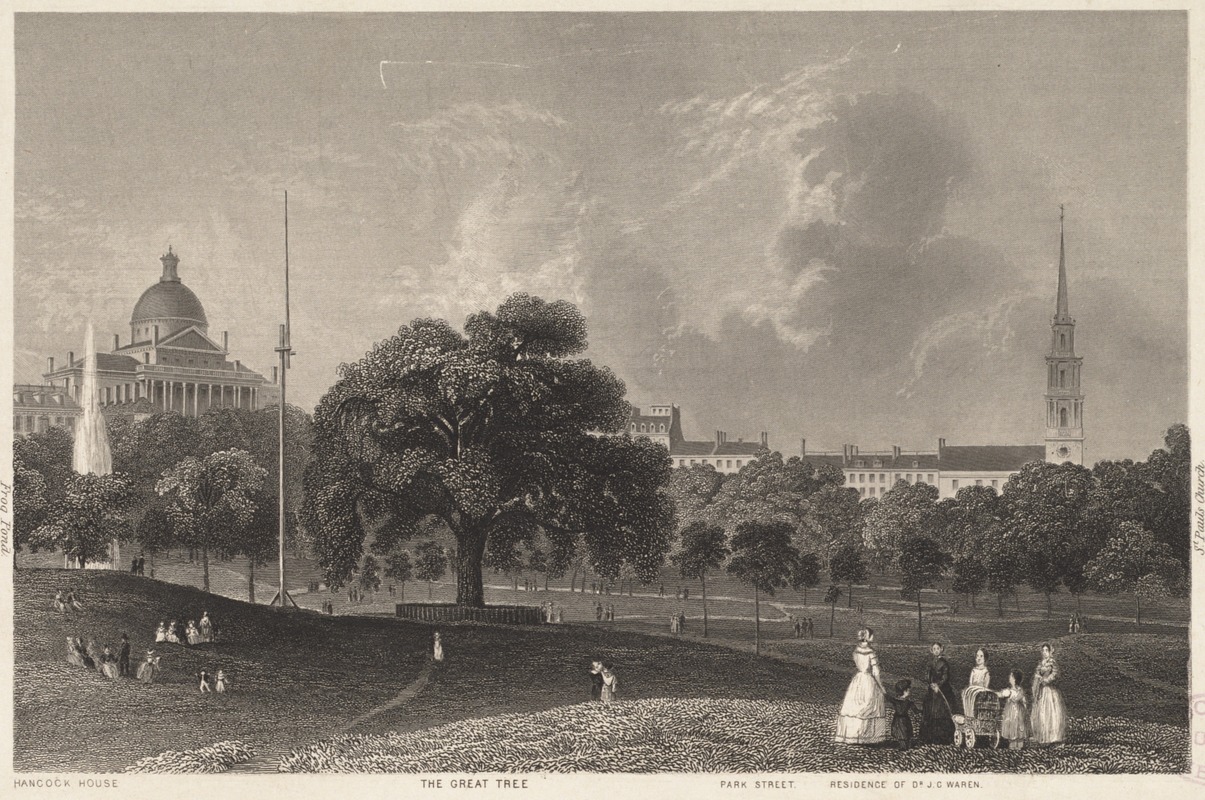
It's also worth noting that in several of the sources I read, pickled limes are noted as a food only popular among New England women and children. Other sources mention that they require developing a taste to enjoy them. As described by William Brennan, a Boston importer: "this commodity has but a very limited sale and confined almost exclusively to a few New England states. After limes are immersed in sea water for twenty four hours it causes such a physical change that they are of no commercial value whatever other than as a pickled lime...in this form they are consumed mostly by women and children of this section of the country who have acquired the taste for them" (1; emphasis mine). I think it's safe to say that pickled limes were not wildly popular nationwide, and appear to primarily have been imported to New England. I think this is important, because I have seen a lot of recipes for "Amy's pickled limes" that start with some variation on "school children everywhere in the 1860s loved pickled limes!" and I don't think this is accurate--I think it's more likely that pickled limes, like many other moments in Little Women, help to root the book in the peculiar yankee culture Louisa May Alcott knew (and often satirized) so well.
![]() |
| Engraving of Boston Common looking towards the State House, 1860 (via) |
What did pickled limes taste like?
Let's get this out of the way first: I'm about as sure as I can be based on the sources available that pickled limes as eaten by Amy March were unsweetened. The earliest set of import records I found that mention pickled limes come from about 1803, but they appear to gain popularity later in the century. By the 1820s there are 3 kinds of imported lime products documented: "Limes: -juice of, -pickled, -preserved in sugar or brandy" (4). Note that here pickled limes are separate from sweet preserved limes, which do exist as their own thing.
My favorite descriptor of pickled limes (and how they might have tasted in the 1860s) comes from a different fictional work published in Godey's Magazine in 1859. In The Embroidered Handkerchief: Or, How a Piccolo-Maniac was Cured, author Mary Janvrin describes pickled limes as "that choice acidulated 'goody' of which schoolgirls are so fond" (2; emphasis mine). I love this description! For me it calls to mind something sour and addictive even if you aren't sure why you keep eating it. I actually feel this way about some pickles, which might be why it speaks to me so much. Later, Dora (one of the schoolgirls who are the main characters in the story) says "'I always keep a supply on hand, and am going to tease papa to import a cargo of them for my own especial appropriation. George says I'm always eating them; and if I go on, he shall call me 'Lady Weazenface;' they pucker up one's mouth so, you know" (2; emphasis mine). Additionally, a later 1890 description of pickled limes specifically notes that they are unsweetened: "pickled limes are an East India delicacy popular in New England and in Great Britain. They are made of the fresh limes pickled in their own juices and spiced without adding sugar. This pickle is popular with men who used to lived in the tropics or have acquired the taste" (6; emphasis mine). While this description (from a CA farmers' newspaper) doesn't match the brined limes that would have been seen in Boston, I do think the limes Amy ate were unsweetened as well. As Dora describes, they were sour enough to make your face pucker! Additionally, salt amplifies flavor; it's entirely likely that a lime soaked in saltwater would taste more intensely lime-y than salty.
Finally, I think perhaps one of the key elements here is that the limes used to make pickled limes in the 1860s probably weren't the green limes I can easily buy in the grocery store, but a small, sweeter variety: fully ripened key limes. I say this because every description I found for how limes were harvested and pickled referred to using ripe yellow limes, and the key lime (Citrus aurantifolia) is also known as the West Indian lime or Mexican lime. I might do a separate blog post about limes, but for now I'll just note that "a ripe lime will be sweeter, less acidic, and juicier than an underripe one" (7). So I think we can likely say that pickled limes were sour but pleasant, and I would be curious to see what elements of the lime's flavor are emphasized by an extended saltwater soak! (Unfortunately, I couldn't find any yellow key limes in my local grocery store mid-pandemic. So I used green Bearss limes for this set of experiments.)
![]() |
| West Indian limes, via UC Riverside College of Natural and Agricultural Science |
How were pickled limes made?
Again, the saltwater brine method is important as a uniquely Boston thing--all of the recipes I found describing salt covering or salt packing methods are from other places, while all of the brined recipes I found are from Boston. While of course it's possible other people in non-New England places made pickled limes with brine, the taste for saltwater-preserved limes seems to have arrived from West Indian trade and stuck around more observably in Boston than in other places. For example, both British and Hawaiian sources describe leaving limes in a warm dry place while coated with salt for several days before putting them into jars, where they cure in the salt and their own juice (9, 10).
Attempting pickled limes
Let's get into what I did! I started by breaking the recipes down into two groups: salt and juice brines, and saltwater brines. (As stated above, I believe the saltwater brines are correct for a Little Women pickled lime, but I also wanted to try all the things.) I had a half dozen limes from the grocery store (green Bearss limes, as noted above), so I decided I wanted to try 4-5 approaches and broke the limes up accordingly (I need more limes, but might wait and try a second batch with more correct limes). I used 3 ingredients: pickling salt, limes, and water.
For the "slit and shove in salt" version, I made 4 shallow vertical slits down the lengths of 2 of the limes, as described in a few recipes (9,10, 11), and filled each cut with pickling salt. Rather than leaving them in the sun, I decided to jar these as described in an 1869 fruit pickling and preserving manual and more modern recipes (12, 13, 14). I will press these down each day to help release juice, then leave them to sit once enough juice is released. Then these will get brined in vinegar.
![]() |
| day 0 |
1. Salt packed: once cured in salt and their own juice, brine in vinegar and spices as described in 11 & 14. Pretty straightforward, just not what I think was mostly seen in Boston.
2. Salt brine (plain): whole limes soaked in salt brine and eaten plain--likely what Amy March would have had, based on the description Dora gives in (2), that she's asking her father to import a barrel for her. This implies to me that kids were eating limes straight out of the saltwater brine, and I can't find any mention of new brine or other preservation of the limes once arriving in Boston.
3. Salt brine, then vinegar brine: whole limes soaked in salt brine, boiled/de-salted, and re-pickled in vinegar as in 15 & 16. This seems possible as an at-home use of imported pickled limes when purchased by adults.
4. Salt brine, then vinegar/sugar: whole limes soaked in salt brine, boiled/de-salted, and re-pickled in vinegar and sugar as in 15b. Given all of these recipes are from Boston and mimic imported limes by first brining in salt water, I think it's possible something like this was originally done with imported pickled limes and then adapted when those were less common to get than the plain fruit. I also have a reference in an 1892 article on CA fruit mentioning that it's best with "yellow sugar" in the brine, so I wonder if sugar started getting added when the variety of limes changed too.
5. Salt brine, then sugar syrup: whole limes soaked in salt brine, boiled/de-salted, and soaked in sugar syrup. One of the articles from Boston Cooking School (17) mentioned this method, and it sounds delicious so I wanted to try it. I also noticed a couple of similar recipes in Peterson's Preserving, Pickling, & Canning Fruit Manual (18), which puts the method as early as the 1860s. Whether it was ever done to pickled limes I don't know...but I'm trying it anyway. For science, of course.
References:
1: United States Congress transcripts for the Committee on Ways and Means, 1908-1909
2: The Embroidered Handkerchief: Or, How a Piccolo-Maniac was Cured, by Mary Janvrin. Godey's Magazine, 1859
3: Tariff hearings, from Miscellaneous documents of the House of Representatives, 1892-1893
4: Rates of Duty on goods, wares, and merchandise imported into the United States; Amendment to the Tariff of 1824, June 1828
5: Limes and Lime Trees in the Leeward Islands, Report by Vice-Consul Galbraith of Antigua,1893
6: Domestic Economy, column, Pacific Rural Press (California) 1890
7: "This is why you should quit passing over yellow limes at the supermarket", The Kitchn, April 24, 2016
8: Florida Fruits and How to Raise Them,1886
Reference Recipes:
9: Pickled Limes (Chinese Method), From Bulletin 49, Hawaii Agricultural Experiment Station 1921
Needed: Limes, Coarse salt, Granulated sugar, Large glass jars fitted with air tight caps.
Wash limes thoroughly expose them to sun for two or three hours to dry out surplus water, rub salt into limes while they are warm from the sunning and again once or twice each day for the next four or five days after they have been exposed to the sun. At the end of that time place salted limes in large glass Jars having air tight caps. Sprinkle surface with coarse salt before placing the cap. Expose the jars of pickling limes to the sunlight for two or more months to cure limes thoroughly before opening Jars. When properly cured pickled limes vary in color from light brown to dark mahogany. When serving remove the number of limes desired, sprinkle with granulated sugar one half teaspoonful of sugar to each pickled lime, and then partly mash. They may be served with meat, rice, and the like.
10: "The Lucknow Receipt for Pickling Limes or Lemons", A New System of Domestic Cookery: Founded upon Principles of Economy, London 1842
Bruise the limes or lemons on a stone then throw them into water and place them afterwards in an earthen vessel covered with salt for two or three days. Shaking the vessel frequently take out the limes when they are soft spread them on a cloth and let them dry. The open air is sufficient in India but in England they must be placed at the side of a stove. When dry add vinegar and the juice which came from them when in the earthen vessel.
11: Pickled Limes, Florida Fruits and How to Raise Them, 1886
Pickled Limes are prepared exactly according to recipe given for pickled lemons and are equally good...Pickled Lemons. Cut the lemons in quarters not entirely apart and put a teaspoonful of salt in each one. Put them where they will dry either in the hot sun or by the stove when they are dried so that they are black and look good for nothing. Prepare the vinegar with cloves, cinnamon, nutmeg, ginger root, onion, and a little mustard seed and pour it boiling hot over the lemons. Keep a year before using. They are quite equal to the West India limes. They require more vinegar than other pickles as the lemons will swell out to their natural size.
12: Amy March's Pickled Limes, The Joy of Pickling by Linda Ziedrich
13: "What to do with preserved limes, your latest kitchen experiment", Bon Appetite Magazine, August 23, 2016
14: Mrs. C’s Lemon Pickles, Peterson's Preserving, Pickling, & Canning Fruit Manual 1869
They should be small, and with thick rind. Rub them with a piece of flannel; then slit them half down in four quarters, but not through to the pulp ; fill the slits with salt hard pressed in ; set them upright in a pan for four or five days, until the salt melts ; turn them thrice a day in their own liquid, until tender; make enough pickle to cover them, of vinegar, the brine of the lemons, Jamaica pepper and ginger; boil and skim it; when cold, put it to the lemons, with two ounces of mustard-seed, and two cloves of garlic to six lemons. When the lemons are used, the pickle will be useful in fish or other sauces.
15: "Pickled Limes", The Boston Cooking-School Magazine, volume 10, 1910
The limes must first be steeped salted water to remove bitterness cook in water until tender drain in jars with whole spices-a tablespoonful to a quart then cover hot vinegar. Seal as in canning. Without experience the exact of salt needed in the brine and time required for steeping cannot definitely stated. Probably a cup salt to a gallon of water and steeping twelve to twenty four hours would about right.
15b: Sweet Pickled Limes, from the same article as a variation
To a gallon of limes steeped in salted take a gallon of vinegar, three of sugar, one fourth a pound of cinnamon, three ounces of cloves, one ounce of mace. Boil the limes very tender, drain, cover with the liquid and spices heated together then as above.
16: "1901 Recipe for Pickling Limes," The Boston Cooking-School Magazine, volume 17, 1912
Make a brine strong enough to float an egg and in quantity to cover a dozen limes. Let stand six days stirring the brine each day. Drain and set to boil in two quarts of boiling water. Let boil fifteen minutes. Let drain and become cold. Scald one quart of vinegar, half an ounce of cloves, half an ounce of mace, half an ounce of ginger root, half an ounce of horse radish, and one ounce of white mustard seed and pour over the limes disposed in fruit jars. Close securely. These are best after keeping some months.
17: "Sweet-pickled limes [variation on pickled limes, similar to recipe above from vol 17]," The Boston Cooking School Magazine of Culinary Science and Domestic Economics, volume 16, 1912
Put the [salt-brined] limes in cold water and let it come to a boil. Cook ten minutes and throw the water away. Repeat the process as long as patience or the kitchen fire holds out. The water should be changed four times at least. Skim them out and put them in a big bowl to cool. Make a thick syrup of sugar and water using a half cup of vinegar to a quart of water. Cook the syrup until it is as thick as molasses. Let it get cold. Prick each lime two or three times with a silver fork. When they and the syrup are cold put them together and let them stand over night. The syrup will then be thinned by the juice of the limes. If it is too watery boil it over again. Put the limes in jars and pour the cold syrup over them. They will keep indefinitely if nobody knows they are in the store closet.
18. Plum Pickles, Peterson's Preserving, Pickling, & Canning Fruit Manual 1869
To every quart of plums, allow one-half pound of sugar, and one pint of best cider vinegar. Melt the sugar in the vinegar, and put spices of all sorts in a fine muslin bag, and boil up with the sugar and vinegar. When the sugar and spiced vinegar boils up, put in the plums, and give them one good boil. If you wish to keep the plums whole, prick them with a needle.
Monday, May 4, 2020
A Little Armchair Travel
| stereocard: "home of Louisa Alcott". Undated, but likely late 1870s? (via BPL) |
I thought I would share a few of the virtual tours I've explored over the last few weeks. I tried to pick the ones that I thought had the best virtual experience, but there were so many more I found! Definitely check to see if a place you're interested in has a virtual tour up right now.
Most of these are free, but some are behind a paywall that goes to support the museum. (Since museums are being hit incredibly hard, this is a nice way to help support them right now if you can.)
I hope you enjoy this list! And if there are any great virtual tours you recommend, I would love to hear about them.
Orchard House (Concord, MA)
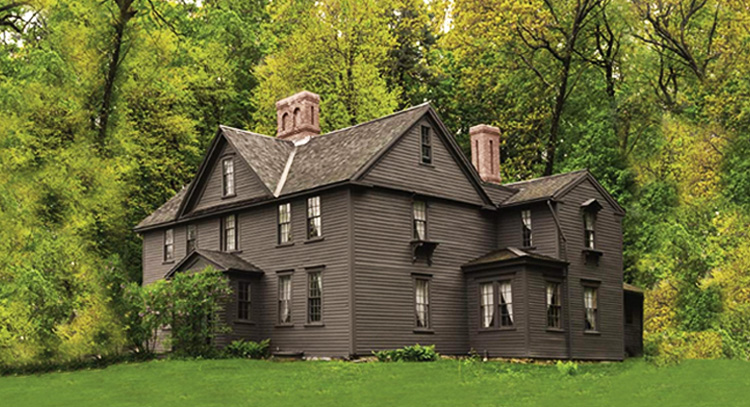
I'm partial to this home of the Alcott family, as I've worked there since 2005. The historic house museum was the home of Little Women author Louisa May Alcott, along with her family. Their history covers many themes that still resonate today: educational reform, women's suffrage, abolition, and class inequality were all an important part of the Alcotts' time in Concord. You can rent a virtual tour here, and check out free posts highlighting specific artifacts each week.
Villa Lewaro, the Madam C.J. Walker Estate (Irvington, NY)
This grand Italian renaissance-inspired villa was owned by Madam C.J. Walker, the first black female millionaire in the U.S. Walker and her daughter A'Lelia were both important figures in social movements of their time: during her lifetime Walker championed programs for black women's economic independence and was a vocal advocate for the anti-lynching movement. You can tour the estate for free here, with narration by Walker's great-great granddaughter. In 2018 the site was purchased by the New Voices Foundation, and you can read more about them (and donate) here.
Winchester Mystery House (San Jose, CA)
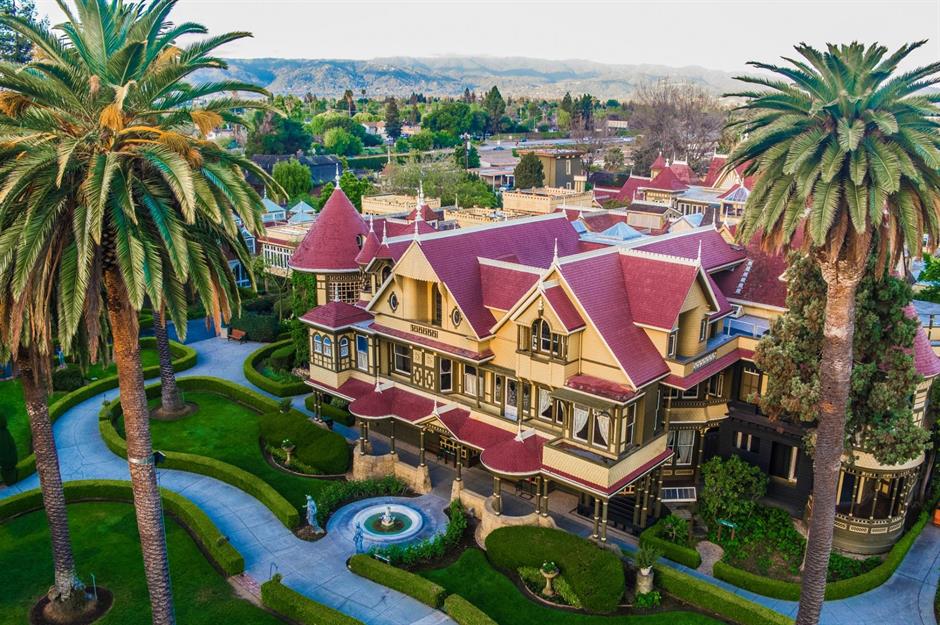
I will never let Mr. Plaid live down the fact that before we were dating, we were in San Jose and he would not tour this house with me! The Winchester Mystery House began life as an 8-room farmhouse purchased by Sarah Winchester, heir to a large part of the Winchester gun manufacturing fortune from her husband. Between 1886 and 1922 Sarah Winchester pretty much constantly added or re-did parts of the house--upon her death the structure had 160 rooms. No one knows why, but there are a lot of (very haunted) theories. The house itself is weird and beautiful, and Sarah Winchester was fascinating person. You can rent or buy a video tour here, or opt for the 360 tour (which I have not tried!).
The Frick Collection (New York, NY)

The Frick has a reputation for its incredible art collection (it is an art museum after all), but I was intrigued by the description of the museum as "the last Gilded Age mansion on Fifth Avenue." All that Wharton immediately made me perk up at that! It was very cool to get a peak inside this very fabulous space. You can see the virtual tour here, which is free and includes an audio guide.
Museo Frida Kahlo (Mexico City, Mexico)
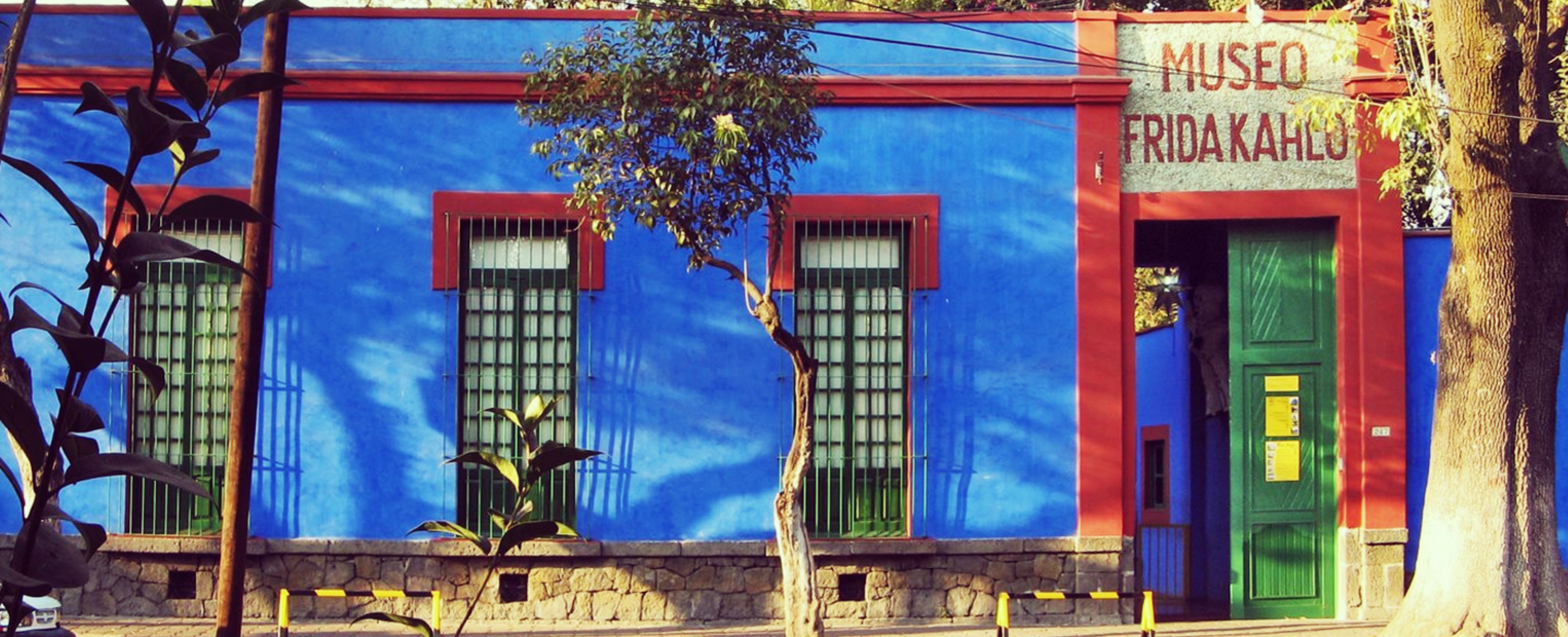
After her death, husband Diego Rivera donated the home of artist Frida Kahlo to become a museum to her life and legacy. During her life, Kahlo was a revolutionary whose art drew from Mexican folk culture and her struggles with chronic pain. Her work focused on reclaiming identity--both her own femininity outside beauty standards and Mexican culture freed from colonialism. The museum has a free photo walk through here, but there's no guide--I recommend reading the information on the rest of the website and at the Frida Kahlo Foundation.
Royall House Museum and Slave Quarters (Medford, MA)

The 18th century home of the Royall family is an important look into enslaved peoples' experiences in the North. The site of the wealthy Royall family is currently the only surviving slave dwelling structure in New England, and the historic site's mission to share the experiences of everyone who lived there is so important for understanding U.S. history. The museum does not have a special guided tour during quarantine, but was previously feature on Stuff You Missed in History Class. You can watch the video here and see the museum's site (with information about how to support the organization) here.
Edgar Allen Poe House & Museum (Baltimore, MD)

I'm including this one specifically because the Poe museum is doing live guided tours of the site via Zoom, which is really cool! You can find out more about signing up for this pay-what-you-can experience here. The Poe museum has actually been on the forefront of incorporating technology into the historic museum experience for a while--I wrote a paper on them in grad school--and I love that they're finding ways to bring the site to life right now.
Lippet House Museum (Providence, RI)

I'm ending on a slightly different kind of tour: this guided tour is entirely in American Sign Language. I was able to spend an afternoon at the Lippett House last summer, and really enjoyed seeing the beautifully preserved rooms and learning about the cutting edge technology (for its time) used throughout the home. Henry Lippett designed the home and had it built for his family in 1865, 10 years before he became governor of Rhode Island; his interest in technology is reflected in the "modern" advances built into the house, like central heating. After their daughter Jeanie became deaf from scarlet fever at age 4, Mary Ann Lippet became an advocate for deaf children's education and founded the Rhode Island School for the Deaf with her daughter in 1876. You can read about the house and watch the ASL tour playlist for free here.
Friday, April 17, 2020
Breakfast Cap for a Bride, 1860s
![]() |
| Godey's Lady's Book, December 1861 (via) |
![]() |
| black net cap, French, from the MFA Boston |
![]() |
| breakfast caps, from Godey's 1863 |
![]() |
| Ribbon base |
![]() |
| completed cap |
![]() |
| cap, hair, and dress |


![1863 Godey's. "Breakfast caps. 1. ...of French muslin trimmed with violet ribbons. 2. ...in the form of a net trimmed all round with a double row of blonde; two ribbon streamers behind. Three roses make a pretty bandeau to the front of the cap. Black or white net may be used for the purpose, and whatever colored ribbon best suits the complexion of the wearer." [jrb]](https://i.pinimg.com/564x/ab/fa/01/abfa01c13ff72e5aa995a6643e446497.jpg)